
What Is a Mokumoku Session?
A first-time guide to meaning, registration, and preparation
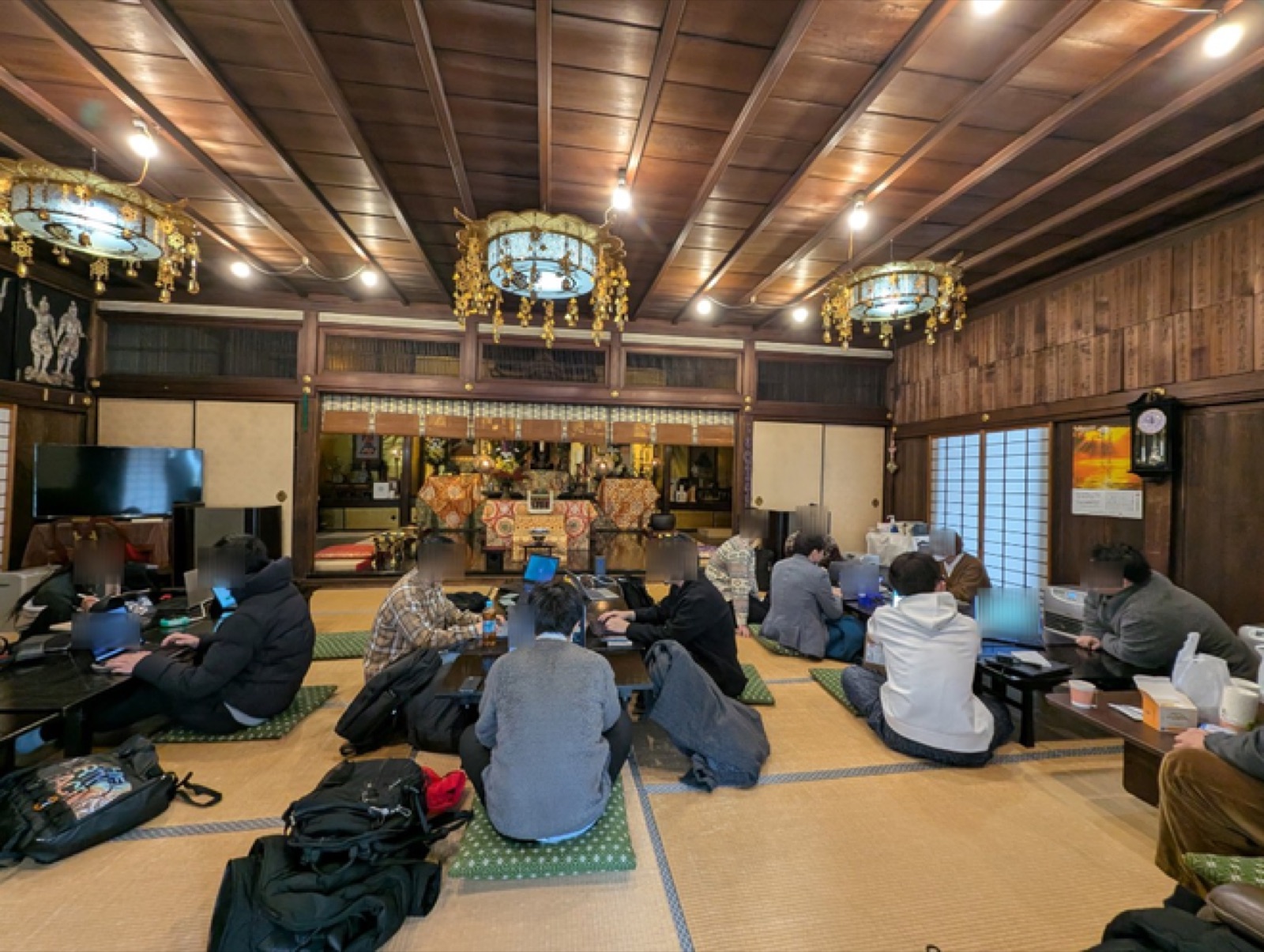
Going to your first mokumoku session can be uncertain: you may not know anyone, have a polished project, or want to speak in a group. Choose one manageable task, then check the actual listing for the audience, entry rules, fee, venue and anything you need to bring.
A mokumoku session is an event where participants gather in the same place or time and each advance work of their own. Unlike an instructor-led study group or a hackathon built around a shared task, what each person works on can differ.This article covers the meaning of mokumoku sessions, how to find one, registration, what to bring, and the day-of flow. For sessions currently open in Kyoto, see the event listing; to browse Miyako de IT by venue or series, use the Kyoto mokumoku guide.
What is a mokumoku session?
Participants bring their own tasks and share a block of time while working independently.
Common tasks include personal development, programming study, reading technical books, certification study, writing, and design work. What is permitted depends on the event, so check its listing.
Five steps for a first visit
1. Decide one task to work on
Choose something concrete, such as advancing a React project or studying for a certification.
2. Find a session
Search connpass or another event platform for “mokumoku” plus the region.
For Miyako de IT sessions currently recruiting in Kyoto, use the event listing. Current event pages, not old article dates, are the source of truth.
3. Check the conditions and register
Check:
- intended participants and prerequisite skills
- venue and access
- start and end times
- late-arrival and early-departure rules
- participation fee
- required items
- code of conduct and venue rules
Whether beginners, solo participants, or flexible arrival are allowed should be confirmed on the individual event page rather than treated as universal.
4. Prepare what your task requires
If you will use a computer, bring your laptop and charger. Earphones, drinks, or other items depend on your work and the venue rules.
Some temple and machiya venues require shoes to be removed. Follow the venue notes when provided.
5. Follow the organizer's guidance on the day
Reception, introductions, work periods, breaks, and closing routines vary by session.
Miyako de IT also changes the flow depending on venue and program, so this guide does not present one fixed timetable as a universal pattern.
Difference from study groups and hackathons
| Format | Main activity | Work topic |
|---|---|---|
| Mokumoku session | Each participant works independently | Different for each participant |
| Themed study group | Listen to talks or lectures | Set by the organizer |
| Hands-on workshop | Follow steps while operating your computer | Set by the organizer |
| Hackathon | Build something, often in teams | Often has a shared theme |
Always check the purpose stated on the individual event page.
First-time concerns and recent Kyoto event evidence
It is reasonable to wonder whether you will be expected to speak, present results or finish a project. A mokumoku session is intended for working on one's own task, while any introductions, sharing or discussion requirements are set by that particular organizer. Bringing a task as small as starting a development environment or reading a chapter is sufficient preparation if the event allows it.
If you may ask for help, jot down four short things: what you are trying to do, where you are stuck, what you have tried, and what you want to ask. Our September 5 Daikoji session report shows a concrete example of work and conversation. The four-line question note also shows how to prepare a useful question.
Recently held sessions and where to find upcoming events
The official connpass event history records the September 26 session at Butsugenji. As of October 18, 2026, an October 31 event at Butsugenji was announced with Digital Nomad Kyoto. That event was still in the future on the verification date, so it must not be presented as an event already held in October. Use the current connpass listing for seats, waiting lists, participation conditions and prices.
If attending alone or as a beginner feels uncertain
The most reliable answer is the event listing itself. Check whether it explicitly welcomes first-time visitors, beginners, students, or solo participants.
For Miyako de IT, the first-time guide explains the path from registration to arriving at the venue.
If IT study groups in general are new to you, see the first IT study group guide for the differences among mokumoku sessions, lightning talks, and themed sessions.
Examples of Kyoto sessions
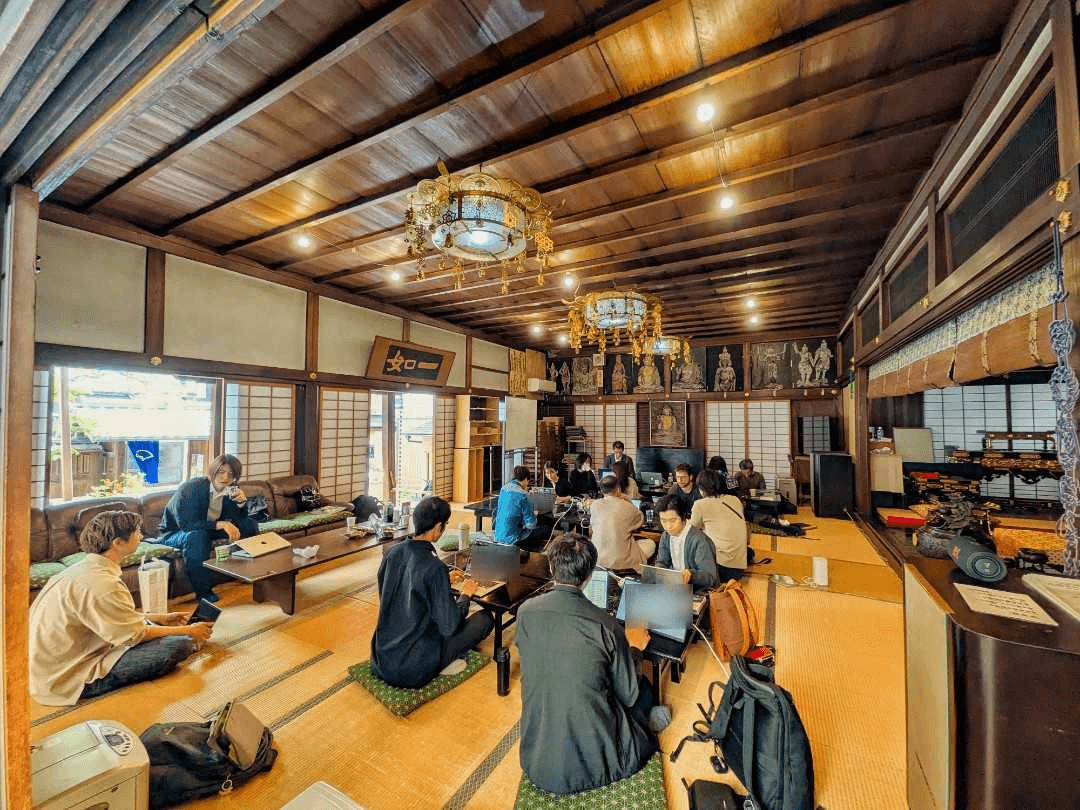
Miyako de IT has held mokumoku sessions at several kinds of Kyoto venues.
- A session at Butsugenji temple
- Mokumoku #57 at Daikoji temple
- Mokumoku #63 at Takahashi in a former ochaya building
These are event records. Use the event listing to see what is currently recruiting.
After attending
A simple review is enough: Were you able to concentrate? Did the format fit you? Did you want to talk with people, and were there opportunities to do so?
You do not need to decide from one visit that a format or community is right for you. Trying another format or venue is also valid.
This guide therefore does not generalize claims such as “three visits are required” or “monthly attendance will create connections.”
Frequently asked questions
How much does it cost?
It varies by event. Check the latest fee on the event page.
Can I arrive late or leave early?
It varies by event. Look for wording such as flexible arrival/departure on the listing.
What should I bring?
Bring what your own task requires. If you will use a computer, a laptop and charger are the basic items. Check the listing for anything additional.
Can I join online?
Online, offline, and hybrid availability varies by event. Check the current listing.
Next step
To attend a mokumoku session in Kyoto, check the current event listing. If you want to follow for new sessions as they open, Miyako de IT on connpass sends a notification when a new event is announced.
If this is your first Miyako de IT event, read the first-time guide after registering.
To examine the potential benefits and limits of the format, see What are the benefits of a mokumoku session?. To browse past Kyoto sessions by venue, use the Kyoto mokumoku event-report hub.
Related articles
An IT Community Guide for Students, Beginners, and First-Time Participants
“Will I be out of place?” Almost everyone feels anxious before joining an IT community. Drawing on the experience of operating a Kyoto community with 647 members, this guide explains how students, beginners, and first-time participants can take a comfortable first step. You can find a place regardless of experience or title.
Kansai IT Engineer Communities and Study Groups: Choosing Between Kyoto, Osaka, and Kobe (2026 Guide)
For people looking for IT engineer study groups and communities in Kansai—Kyoto, Osaka, and Kobe—this guide sets out how to search in each city and what travel between them involves. Lists of individual groups are left to the Kyoto and nationwide articles; this one is limited to what you need in order to decide across several cities. It was compiled from 7 years and 164 events of operating a community in Kyoto.
First IT Study Group Checklist: Registration, What to Bring, Etiquette, and the Day-of Flow
A practical checklist for a first visit to an IT study group: who the event is for, format, cost, venue, code of conduct, registration, what to bring, reception, introductions, questions, leaving early, photographs, and what to do if something feels wrong.
Source data
The figures cited in this article are based on primary data in the Miyako de IT annual statistics report. It publishes yearly event counts, venue distribution, and event-format data.
Written by
Tomohiro Iida
Open event related to this article
 Waitlist
Oct 31 (Sat)
Original event title