
Five study-group sponsorship and co-hosting cases: designing for hiring and technical communications
Key points (30-second read)
- This article verifies facts such as events, co-hosting, and venue provision. Hiring numbers and application increases are unmeasured, so it does not claim causation.
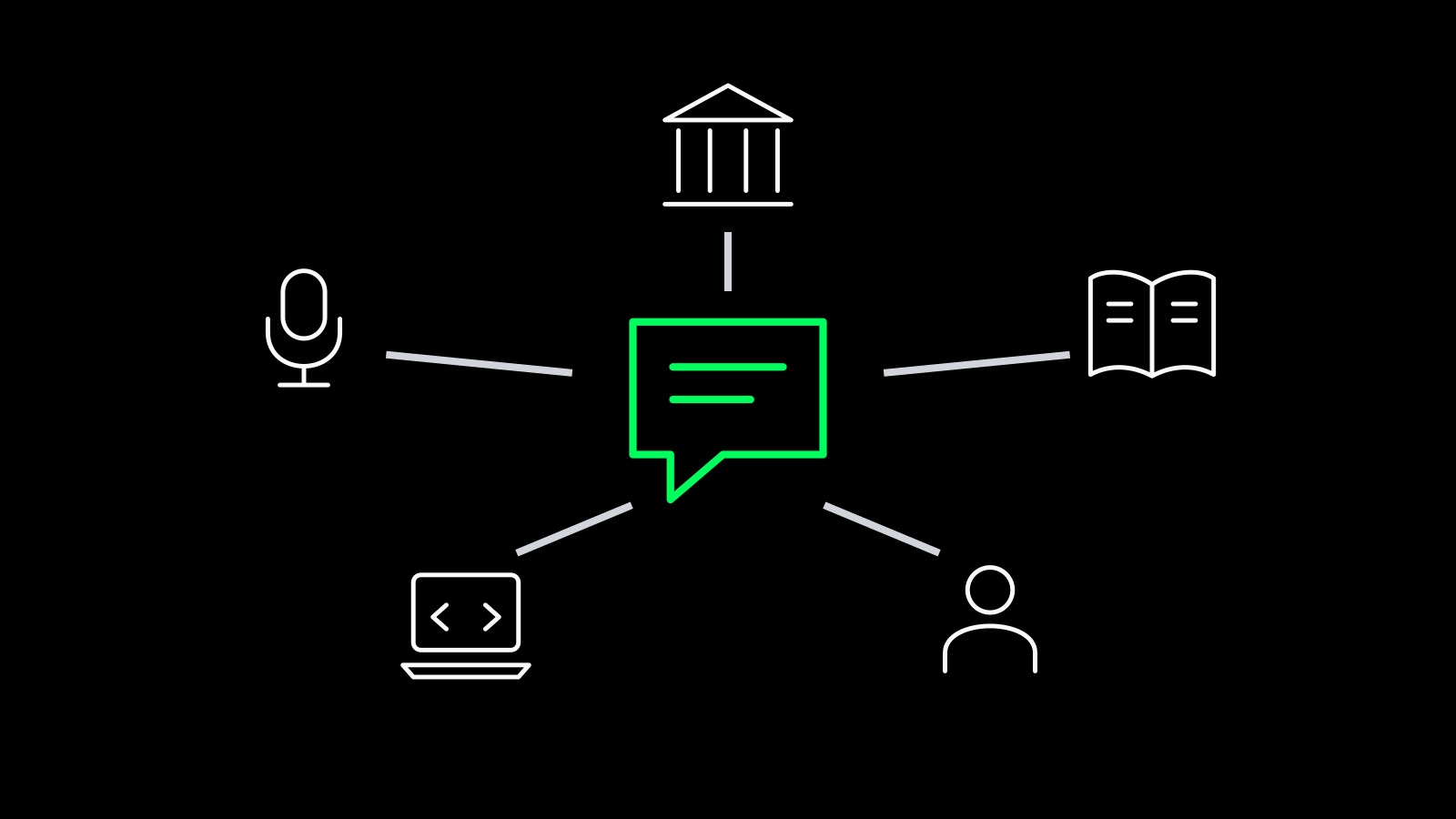
- It introduces five publicly documented Miyako de IT partnerships through five forms: venue provision, co-hosting, education, international exchange, and public-facility experimentation.
- Read every case with its mechanism—why it can become a foundation for hiring and technical communications—not as a promise of quantitative results.
- See the sponsorship overview and sponsor guide for theory, options, and process.
“We hear that sponsoring a study group helps hiring and technical communications, but what actually happens in the field?” Technical-communications and employer-branding teams often ask for concrete cases. Information explaining sponsorship menus and processes has increased, but opportunities to learn how a specific partnership began and continued remain limited.
This article focuses on five public cases from Miyako de IT, a Kyoto community operating since 2019 for 7 years, with 164 events, 647 members, and 14 partner organizations. Its partners include public bodies, universities, temples, and international communities. The cases are diverse, but each contains a structure companies can use when designing sponsorship.
The broader effects, menus, and process of sponsorship are covered in How corporate sponsorship supports IT communities; this article focuses on field cases.
Read facts, implications, and outcomes separately
| Layer | What it covers |
|---|---|
| Verified facts | Public data on format, frequency, scale, venue, and co-host |
| Practical implication | How a company might adapt a similar partnership |
| Unmeasured outcome | Hiring, applications, awareness, or deals; never asserted without data |
Separating what happened from how a company could apply it keeps Miyako de IT's explanation robust enough to use in a business proposal.
Five forms of sponsorship and partnership
| Form | Description | Case in this article |
|---|---|---|
| Venue provision | Open a facility or office as an event venue | Butsugenji |
| Co-hosting | Share theme, attraction, and operation | Kyoto Chie Sangyo Sozo no Mori / KOIN |
| Education partnership | Create contact between students and working engineers | Taisho University Kyoto Academia |
| International exchange | Connect international and local IT talent | Digital Nomad Kyoto |
| Experimentation | Test events in a new venue or around a new theme | Former Kyoto Prefectural Assembly Hall |
Corporate sponsorship need not be limited to one form. Combine forms according to the objective. See the sponsor guide for menu details.
Case 1: Venue provision—Butsugenji
Butsugenji, at Rokkaku Aburanokoji in Nakagyo Ward, Kyoto, has continuously provided its main hall for Miyako de IT mokumoku sessions, year-end events, and international exchanges since April 2024.
What is happening: The experience of opening laptops on tatami has itself become a reason to participate, and “an IT study group at a temple” has become a recognizable element of Miyako de IT. The temple has also gained contact with a new audience of IT professionals. Implication for companies: Venue provision is the easiest sponsorship form to reproduce. Opening an office lets participants naturally experience a working environment and atmosphere that a job listing cannot convey. The Butsugenji case shows that the quality of the venue experience can itself become a communications asset. A space that expresses the company or place is more memorable than a generic meeting room. See Why a venue becomes a brand and the Butsugenji case.Case 2: Co-hosting—KOIN
With Kyoto Chie Sangyo Sozo no Mori, Miyako de IT has co-hosted IT Engineer Networking in Kyoto at KOIN in Kyoto Economic Center. Eight events of roughly 30–40 people have grown into regular co-hosting across several years, with derivative projects including legal seminars and academia-industry sessions.
What is happening: Becoming a regular event on the annual calendar, rather than a one-off, means the industry-support institution and working IT engineers keep gathering in the same room. The community leads planning, attraction, and event-day operation, while the co-host provides place and trust. We have not confirmed specific feedback cases reflected in policy with the partner, so we do not present that as an outcome. Implication for companies: The value of co-hosting lies in continuity. A quarterly technical event involving the company compounds contact with participants instead of producing one exposure. Because the community handles operations, the model can work even without a dedicated in-house technical-communications specialist. See the KOIN case.Case 3: Education partnership—Taisho University Kyoto Academia
Mokumoku sessions, generative-AI study meetings, and craft-beer events are held regularly at Taisho University Kyoto Academia. Students and working IT engineers sit at the same table, in groups of 10–30 per event.
What is happening: The university facility functions as one base for the regional technical community, creating an ongoing rather than one-off relationship between the educational institution and the community. Students gain contact with professional practice, while working people gain contact with academia. Implication for companies: For companies seeking contact with young IT talent, partnership with a community that includes an educational institution offers a different kind of encounter from a joint job fair. Its defining feature is equal dialogue with students in a study-group setting without putting recruitment front and center. See the Taisho University Kyoto Academia case.Case 4: International exchange—Digital Nomad Kyoto
Digital Nomad Kyoto is a community of overseas digital nomads staying in Kyoto. It has co-hosted more than 20 bilingually operated mokumoku sessions at venues including Butsugenji, with 10–20 people per event from Europe, North America, and Asia.
What is happening: Kyoto IT talent gains regular contact with overseas work styles and career views, while overseas participants gain an entry point for recognizing Kyoto as a city where they can work. Implication for companies: Building a place for contact with global talent and English-language technical exchange from zero is not easy for one company. Co-hosting or sponsoring an established international community makes it easier to begin by joining a place that already works. See the Digital Nomad Kyoto case.Case 5: Experimentation—Former Kyoto Prefectural Assembly Hall
An AI-agent lightning-talk event was held in the former assembly hall of the Former Kyoto Prefectural Office Main Building, an Important Cultural Property. The operation documented a flow that follows public-facility use rules and positioned the event as an experiment connecting the administration, community, and speakers.
What is happening: The experience of the Important Cultural Property itself became a reason to participate and tested the possibility of opening an administrative facility to a technical community. Implication for companies: Sponsorship is not limited to joining an existing format. An experimental partnership can jointly launch a new proposal around “this place” and “this theme.” Incorporating a hands-on session for the company's product or user testing is one application of this form. See the Former Kyoto Prefectural Assembly Hall case.What the five cases share
1. Continuity matters more than a one-off event
Participants need repeated chances to encounter people and technical themes. Exposure alone is not an adequate short-term KPI.
2. The design stands on community trust
Partners respect the community's autonomy. They do not demand participant lists or use the event as a one-way advertising slot. Effects still require separate measurement.
3. The experience of the place becomes content people talk about
Temples, cultural properties, and university campuses give participants an experience worth photographing, reporting on, and retelling.
Quantitative effects such as the number of hires or the increase in applications vary greatly by community, company, and period, so this article does not present them. Examples of how Miyako de IT sponsor companies use the community include referral hiring through study groups, jointly holding internal study groups, and user testing their own products; see the overview FAQ. We recommend evaluating effects with indicators designed on an annual basis.
Break KPIs down from exposure to relationship formation
| Purpose | Leading indicators | Outcome indicators |
|---|---|---|
| Technical communications | Talks, articles/reports, employee participation, repeat participation | Branded search, candidate awareness, outside speaking requests |
| Hiring | Candidate conversations, casual-interview transitions, employee introductions | Applications, interviews, hires, retention |
| Business development | User tests, problem interviews, joint projects | Deals, PoCs, partnerships |
| Region and education | Student participation, continued participation, joint classes/research consultation | Internships, joint research, regional projects |
Measure with consent and community rules, not by assuming access to participant lists. If a sponsorship is solely for regional contribution or maintaining the place, state that purpose plainly.
How a company can reproduce the structure
To reproduce these structures in a company, follow the overview article's five steps: clarify the objective → make an inquiry → hold a discovery meeting → receive a project proposal → hold and continue the event.
- Make the first step small: start with one venue provision or one networking-event sponsorship, not an annual contract.
- Have the responsible person attend once: before considering sponsorship, attend as a regular participant to see the audience, atmosphere, and operating quality directly. Anyone can register for Miyako de IT through connpass.
Frequently asked questions
Why are there few company names in these cases?
This article includes only partnerships already public on the site. Miyako de IT has 14 partner organizations including companies and groups, but the public scope of individual sponsorship content and effects differs by partner, so it limits detail to five documented cases. Discuss a partnership suited to your industry and purpose through contact.
Can a company outside Kyoto sponsor?
Yes. Digital Nomad Kyoto illustrates continuing work with organizations that are not locally based. Online participation, speaking when visiting, and co-hosting can be designed around distance. For an outside company seeking contact with Kyoto talent, regional-community collaboration can be a first move before establishing a local base.
Where can I check indicative sponsorship costs?
The sponsor guide publishes the available options and cost range. A specific proposal follows a discussion of purpose and scale.
Conclusion: Read cases as mechanisms
The five cases show verified facts of holding and continuing events, not guaranteed hiring or technical-communications outcomes. Repeated contact, respect for community autonomy, and an experience people talk about are useful hypotheses for partnership design; KPI and tracking data are still required. See the sponsorship overview, sponsor guide, and community partnership guide, or contact us to discuss a suitable form. For the municipal perspective, see How municipalities can collaborate with IT-talent communities.
Related linksRelated articles
How Corporate Sponsorship Supports IT Communities: Benefits and Process
More companies are sponsoring IT communities for recruiting branding and technical communications. Based on operating a Kyoto community of 647 members for 7 years and 164 events, this guide covers benefits, partnership options, process, and failure patterns.
In Kyoto, Making Something Together: The Connections We Hope to Nurture at Miyako de IT
What makes an IT community worth returning to? Miyako de IT founder Tomohiro Iida reflects on meeting people in Kyoto, following curiosity, and supporting small personal challenges.
A Four-Line Help Note Inspired by a Kyoto Mokumoku Session
Using Miyako de IT's Daikoji session as context, a practical four-line help note for discussing blockers with someone new—without claiming unmeasured outcomes.
Source data
The figures cited in this article are based on primary data in the Miyako de IT annual statistics report. It publishes yearly event counts, venue distribution, and event-format data.
Written by
Miyako de IT Editorial Team