
In Kyoto, Making Something Together.
The connections that continue beyond an event
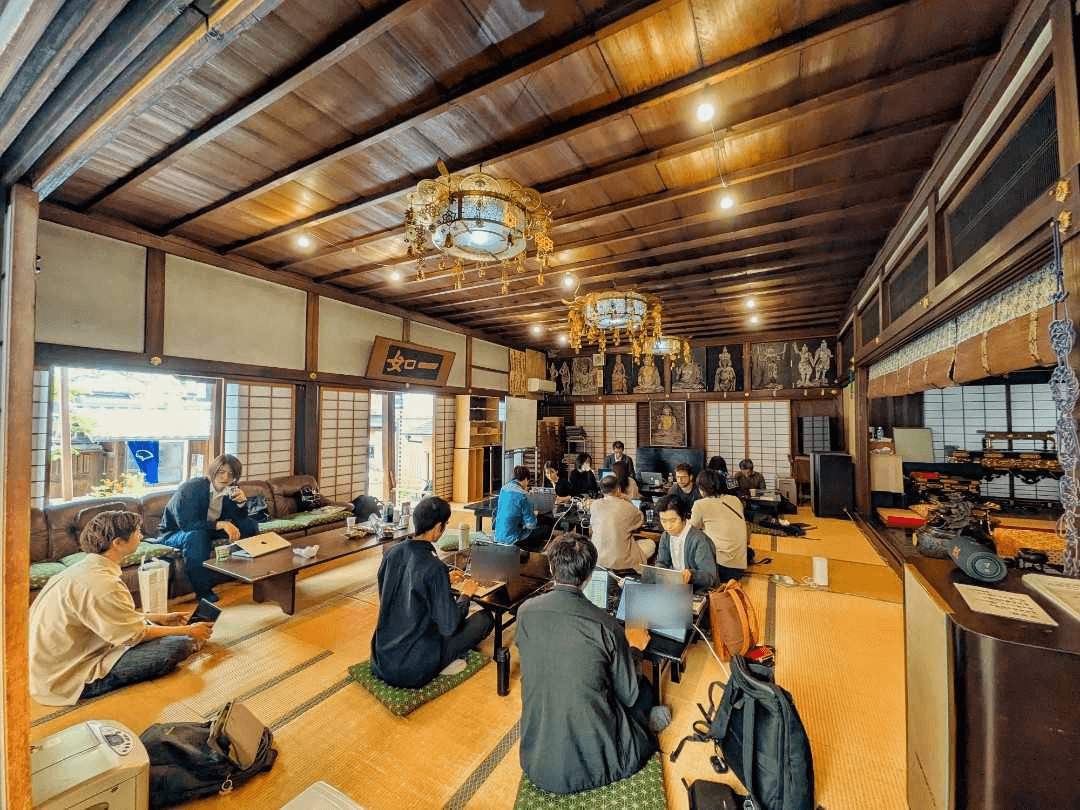
Open a laptop at a temple in Kyoto.
Picture someone meeting another developer for the first time. Across the room, a student is building an app. When everyone takes a break, conversations might turn to AI tools, problems at work, or what people do outside work. This is an illustrative scene of the kind of time we want to make possible, rather than an account of a particular gathering.
Miyako de IT has organized coworking sessions, study groups and meetups in Kyoto since 2019. Through this work, I have met people who have stayed in touch for years, people I can think through new ideas with, and people I can turn to for advice. Those relationships are among the most valuable things this community has given me.
I want to help more people find that value.
A city becomes more interesting when there is someone you want to see again
Kyoto is home to developers, researchers, founders and creators working in many fields. Their everyday circles do not always overlap. Bringing them into the same room, across employers, universities, generations and specialties, creates the possibility of an unexpected discovery.
"How did that project you were working on last time turn out?"
The next time you meet, you can pick up where you left off. Having more people you want to see again can make working and living in Kyoto more enjoyable.
Start with what someone is excited about right now
Web development, AI, design, security, robotics and games are useful descriptions of technical interests. But I am just as interested in what someone is curious about right now and what they hope to make.
"I'm building a small app for my family."
"I started making a game outside work."
"I'm thinking about how AI could help a local shop."
These are examples of conversations, not quotations from specific participants. They can open doors to shared interests, unfamiliar perspectives and new friendships.
There is real encouragement in finding someone who enjoys hearing about what excites you. We want that curiosity to have space at Miyako de IT.
From a small "I'd like to try" to another opportunity
One example is a team formed by people who met through Miyako de IT in 2019. The team developed the blood-donation support DApp Cycle and won the top prize at NEMTUS's HACK+2023. The award belongs to the team; the published HACK+2023 record describes its work. Miyako de IT has also co-hosted sessions with Digital Nomad Kyoto, bringing together Kyoto developers and visitors from overseas. You can read about the community's activities in the activity collection. A published report from Daikoji temple describes one concrete gathering. These are historical examples, not proof that the imagined opening scene occurred.
I hope more small experiments can find their next opportunity here: letting someone try an unfinished app, giving a first technical talk, discussing research with someone outside the field, or exploring a local problem with a developer.
These beginnings do not always need a major event or a budget. Sometimes all they need is someone enjoying their work and someone else who wants to hear about it.
Let each person's experience belong to them
Giving a talk for the first time. Helping someone debug a project. Getting the first response to something you have built. Starting a project together. Making a new friend.
Different people take different things from a gathering. When participants want to share their experiences, I would like to document them in their own words and with their permission.
A personal account might help someone else take a first step. It can also help people at local organizations, universities and companies understand what is happening in Kyoto's technical community. We should distinguish documented outcomes from our hopes for future work.
Come by, even if you have no particular project
You never have to give a talk or start a new project to take part.
Some days are for concentrating on your own work. Others are for talking with people, or just taking it easy. First-time visitors, returning participants and familiar faces should all feel free to join at their own pace. The first-time guide explains how to take part.
I want Miyako de IT to remain a place where something interesting can happen naturally: somewhere people think, "I'd like to come back," or "I want to bring a friend next time."
Years from now, I hope more people will look back and feel glad they came along.
In Kyoto, with someone, make something.Let's keep enjoying the process together.
— Tomohiro Iida, founder of Miyako de IT
Find upcoming events / See the community's activitiesRelated articles
A Four-Line Help Note Inspired by a Kyoto Mokumoku Session
Using Miyako de IT's Daikoji session as context, a practical four-line help note for discussing blockers with someone new—without claiming unmeasured outcomes.
Miyako de IT Sponsor Award for YARIGAI at Impact Kyoto Hackathon 2026
Miyako de IT joined Impact Kyoto Hackathon 2026 as a sponsor and presented its Sponsor Award to team YARIGAI. In support of the project’s focus on preserving purpose and human value in the generative-AI era, the team received invitations to attend Miyako de IT events free of charge for one year.
Kyoto Mokumoku Sessions: Temple Reports, Participation, and How to Find One
A hub for Kyoto mokumoku sessions, connecting participation guidance, the effects of repeated attendance, reports from temples and other venues, and practical answers based on 164 Miyako de IT events.
Source data
The figures cited in this article are based on primary data in the Miyako de IT annual statistics report. It publishes yearly event counts, venue distribution, and event-format data.
Written by
Tomohiro Iida
Open event related to this article
 1 seats left
Oct 31 (Sat)
Original event title