
Mathematics Preparation for Quantum Computing: Event Report
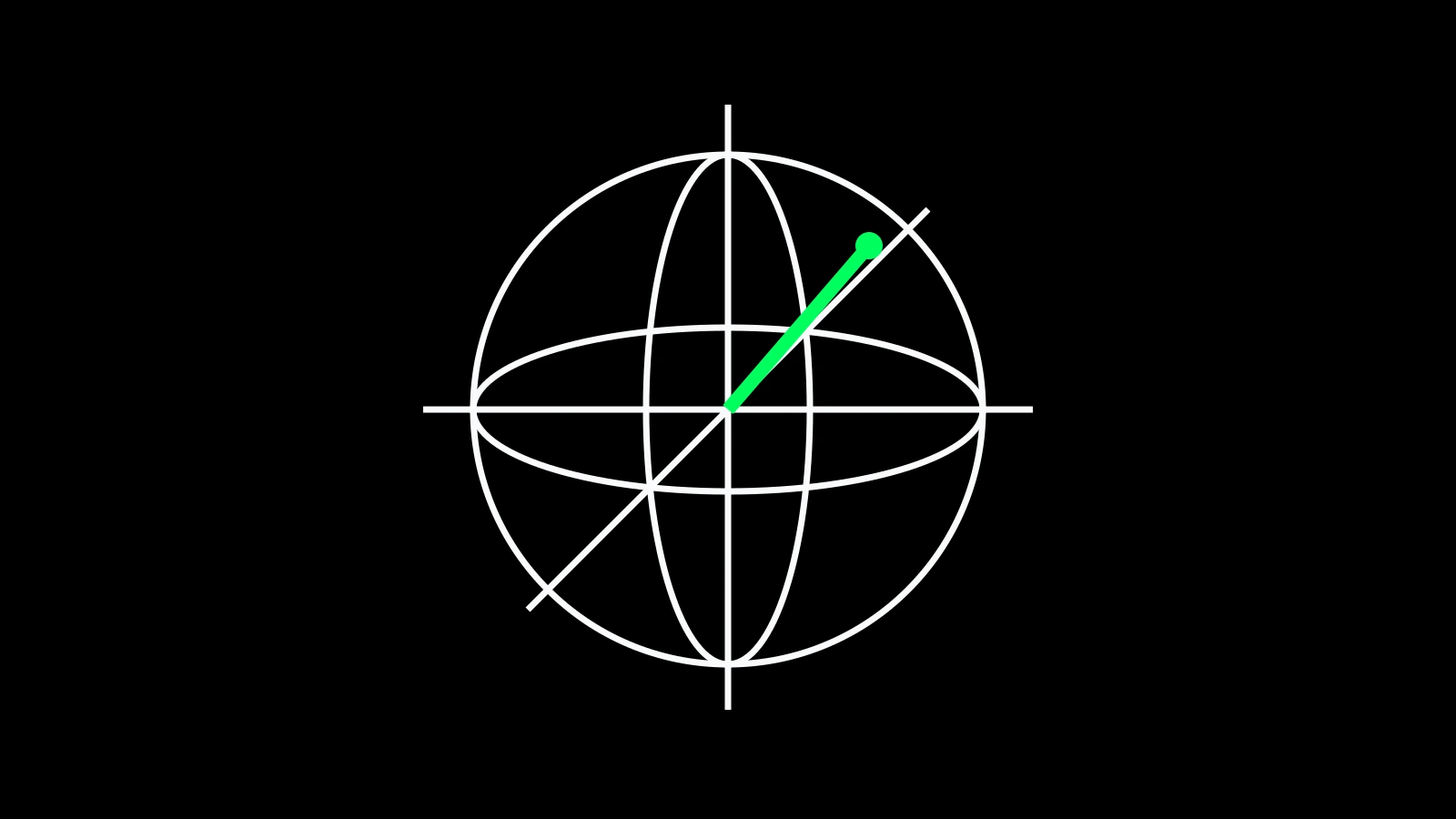
Mathematics Preparation for Quantum Computing
On June 25, 2026, six people joined an online Miyako de IT preparation session presented by Hajime Konagai. The session reviewed the mathematical language used in introductory explanations of quantum computing.
Event overview
| Item | Detail |
|---|---|
| Date and time | June 25, 2026, 7:00–9:00 p.m. |
| Format | Online |
| Participants | 6 |
| Presenter | Hajime Konagai |
| Event page | connpass |
Why the mathematics matters
Quantum-computing explanations quickly introduce state vectors, complex amplitudes, measurement probabilities, and matrices. Reviewing those ideas first makes later circuit diagrams easier to interpret.
Six foundations
1. Vectors and quantum states
A one-qubit pure state can be written as `|ψ⟩ = α|0⟩ + β|1⟩`. The coefficients are amplitudes, and their squared magnitudes give measurement probabilities.
2. Complex numbers and phase
Amplitudes may be complex numbers. Their magnitude contributes to probability, while their relative phase determines how states interfere.
3. Superposition and measurement
A qubit can be in a superposition before measurement. If `α = β = 1/√2`, measuring in the computational basis gives 0 or 1 with equal probability.
4. The Bloch sphere
The Bloch sphere represents a one-qubit pure state as a point. The north and south poles correspond to `|0⟩` and `|1⟩`; the angles describe amplitude balance and relative phase.
5. Matrices and quantum gates
Quantum gates are represented by unitary matrices. Common examples include X, Y, Z, H, S, T, and the square root of X. The H gate is especially important because it can create an equal superposition from a basis state.
6. Inner products and orthogonal bases
Inner products express overlap between states. Orthogonal basis states can be distinguished by measurement in that basis.
Suggested self-study order
1. Vectors and matrices.
2. Complex numbers.
3. State vectors and measurement probability.
4. The Bloch sphere.
5. Common gates and short circuits.
The session served as preparation for the second quantum-computing lecture and the broader three-part series.
Related articles
A Three-Part Introduction to Quantum Computing for IT Engineers
A guide to Miyako de IT's three-session quantum-computing series: foundations, quantum circuits and Shor's algorithm, implementation methods, IBM hardware, noise, and Grover's algorithm.
How Quantum Computation Works: Quantum Circuits and Shor's Algorithm
Miyako de IT's second quantum-computing session covered qubits, quantum circuits, interference, and Shor's factoring algorithm, with short yoga breaks between technical sections.
Quantum Mechanics and Yoga: First Introduction to Quantum Computing for IT Engineers
On May 25, 2026, Miyako de IT held the first of a three-part quantum-computing series at Kokando. Physicist Tetsuya Onogi introduced why quantum computing matters, with yoga breaks led by Yuka Onogi.
Source data
The figures cited in this article are based on primary data in the Miyako de IT annual statistics report. It publishes yearly event counts, venue distribution, and event-format data.
Written by
Miyako de IT Editorial Team
Open event related to this article
 Waitlist
Oct 31 (Sat)
Original event title