
Choosing Between connpass, Doorkeeper, and Meetup
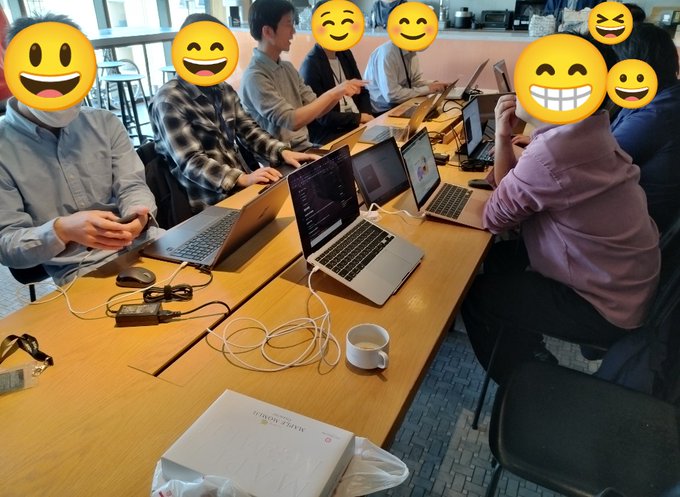
The event platform used for an IT engineering event has practical consequences. Announcement reach, participant audience, interface, price, payments, and data access differ substantially among services.
Miyako de IT has held 164 events over seven years and compared multiple platforms along the way. This guide summarizes connpass, Doorkeeper, and Meetup from that operating experience.
Overview
| Item | connpass | Doorkeeper | Meetup |
|---|---|---|---|
| Home market | Japan | Japan | United States |
| Main audience | Japanese engineers | Japanese technology communities | International and multi-category |
| Free organizer option | Yes | Yes, with limits | No since 2020 |
| Languages | Japanese | Japanese and English | Multiple languages |
| Integrated payments | No; external service required | Yes | Yes |
| API | Yes | Yes | Yes |
connpass: the standard for Japanese engineering study groups
In one line: the de facto platform for Japanese IT engineering communities.Strengths
- The largest relevant Japanese engineering audience and broad announcement reach.
- A simple interface and quick event creation.
- Group features suited to continuing communities.
- A wide range of operation without an organizer fee.
- Strong connection with X.
Limitations
- No integrated payment; a service such as Stripe must be connected separately.
- Little awareness among users outside Japan.
- Limited customization and an older-looking interface.
- Individual event pages do not consistently rank strongly in search.
Best suited to
- Free or inexpensive events for Japanese engineers.
- Regular community operation.
- Cases where announcement reach is the priority.
Miyako de IT uses connpass as its main platform because of its audience. An announcement can reach both prior participants and new users browsing the service.
Doorkeeper: an option for paid and closed events
In one line: a technology-community platform with stronger support for paid events and membership models.Strengths
- Integrated payments through Stripe.
- Membership, invitation, and approval features.
- A polished interface.
- Relatively complete English support.
- Strong community-level management features.
Limitations
- A smaller audience than connpass.
- More restrictions on the free option.
- Less organic discovery by new participants.
Best suited to
- Paid conferences.
- Members-only study sessions.
- Closed communities.
- Company-operated technical events.
Miyako de IT tested Doorkeeper but does not use it as the main platform because its announcement reach was narrower than connpass. Some Ruby and specialist communities, however, use it as their primary service.
Meetup: international and multi-category
In one line: a global community platform spanning technology, sport, language, hobbies, and business.Strengths
- A global user base.
- Reach across many subject categories.
- Access to international residents and digital nomads.
- Polished applications and interface.
- Strong location-based recommendations.
Limitations
- The organizer's free option ended in 2020, so a subscription is required.
- Lower adoption among Japanese engineers.
- Search is not optimized specifically for Japanese users.
- It is not specialized in technology.
Best suited to
- Events for international residents and digital nomads.
- Communities combining multiple subjects.
- Events operated primarily in English.
- International exchange.
Miyako de IT does not operate its own Meetup group, but co-host Digital Nomad Kyoto uses Meetup. Using both services for an international engineering event broadens the audience.
Selection guide
Who are the participants?- Primarily Japanese engineers: connpass.
- Paid or closed audience: Doorkeeper.
- International or multi-category audience: Meetup.
- Free: connpass; Meetup requires an organizer subscription.
- Paid at ¥3,000 or more: Doorkeeper or Meetup may simplify payment.
- Yes: connpass.
- No, the event is intentionally closed: Doorkeeper.
- Monthly or more often: any of the three can use group features.
- One-off event: connpass is the simplest starting point.
Combining platforms
An organizer does not need to choose only one. Miyako de IT uses:
- Main platform: connpass for nearly all 164 events.
- Co-hosted events: the partner's Doorkeeper or Meetup group as appropriate.
- Special events: an independent form plus Stripe for a large hackathon or similar program.
This makes it possible to reach the different audiences already present on each platform.
Conclusion: begin with connpass and add what the event needs
For a Japanese IT engineering event, connpass is usually the practical starting point because of its audience, free operation, and simple interface. Doorkeeper or Meetup can then supplement it when payment, a closed audience, or international reach matters.
Time spent publishing the first event and learning from participants is generally more valuable than extended platform deliberation.
People looking for events near Kyoto can follow the Miyako de IT connpass group, which announces sessions once or twice a month.
Related articles
15 Active IT Engineer Communities to Join in 2026
A catalog of 15 communities for IT engineers—nine nationwide and six regional. Compiled from 7 years and 164 events of community operations in Kyoto, it covers choosing by learning, networking, speaking, or region; four steps to a first visit; and common questions. This is not an exhaustive nationwide list. The order is not a ranking, and each community's activity was checked against primary sources such as official sites and connpass.
Designing an IT Study Group: Mokumoku, Reading, Lightning Talks, and Hands-on Formats
A guide for organizers choosing among four repeatable study-group formats and turning one into a monthly series, based on 7 years and more than 164 events in Kyoto.
How to Learn Programming in Kyoto: Self-Study, Schools, and Study Groups
An objective comparison of three ways to learn programming in Kyoto: self-study, programming schools, and study groups. It explains who each route suits, likely costs, and how to combine them using services available to Kyoto residents.
Source data
The figures cited in this article are based on primary data in the Miyako de IT annual statistics report. It publishes yearly event counts, venue distribution, and event-format data.
Written by
Miyako de IT
Open event related to this article
 Waitlist
Oct 31 (Sat)
Original event title