
How to Learn Programming in Kyoto: Self-Study, Schools, and Study Groups

How to Learn Programming in Kyoto: Self-Study, Schools, and Study Groups
The principal routes available in Kyoto are self-study through services such as Progate, Dotinstall, and paiza Learning; schools such as TECH I.S., SAMURAI ENGINEER, and Kyoto Computer Gakuin; and study groups or communities. For Java, paiza Learning and Kyoto Computer Gakuin (KCG) are options. People seeking a structured IT-school curriculum can consider online courses eligible for public training benefits, while people minimizing cost can combine self-study and meetups.Key points
- The three main routes are self-study, programming schools, and study groups. Choose by learning stage and objective rather than treating one as universally best.
- Services such as Progate and Dotinstall make self-study inexpensive, but access to help and sustained motivation can be difficult.
- Schools provide structured learning but can cost several hundred thousand yen to more than ¥1 million. Always confirm current fees on the official site.
- Study groups and communities often cost a few hundred yen to about ¥2,000 and let people at similar stages share progress.
- If you are not rushing to change careers, combining self-study with study groups is often efficient in both cost and learning.
This article is written and operated by Netsujo Inc., which has run the Kyoto IT engineering community Miyako de IT since 2019. The recommendations draw on 7 years and 164 mokumoku and study sessions. The connpass group has more than 647 registered members; this is a registration count, not a count of actual participants.
Three routes for learning programming in Kyoto
1. Self-study: use online materials and books at your own pace.
2. Programming school: follow a curriculum with mentors.
3. Study group or community: continue learning with people who share your interests.
Each differs in cost, time, and learning efficiency. The right choice depends on fit.
Route 1: self-study with online materials
Self-study is the lowest-cost way to begin, and online learning works regardless of where in Kyoto you live.
Representative services
- Progate: beginner-oriented lessons presented as slides in the browser. No development-environment setup is required, and introductory lessons are free.
- Dotinstall: short videos of around three minutes, each focused on one topic. Its material often serves as the next step after Progate.
- paiza Learning: combines videos and exercises for languages including Java, Python, C, and Ruby. Introductory courses are free; paid plans began at ¥1,078 per month when this article was written. Check the official site for current pricing.
- Udemy: buy individual courses when you want to study a particular language or framework in depth.
Who it suits
Self-study works for people who prefer their own pace or have a limited budget. Its weaknesses are having nobody to ask when stuck and having to maintain your own motivation. Learners sometimes understand the syntax but stop after completing a course because they cannot see what to build next.
Route 2: programming schools
A school is an option when you want a structured curriculum, mentors, and peers. Kyoto residents can choose among in-person programs in the city, programs elsewhere in Kansai, online-only schools, vocational colleges, and graduate schools.
Primarily online schools
- TECH I.S.: Kyoto residents attend its online school because it has no in-person Kyoto classroom. Its operation emphasizes community.
- SAMURAI ENGINEER: centered on one-to-one online lessons. Some career-change courses qualify for Japan's professional training benefit system; eligible learners may later receive 70–80% of tuition. Confirm current eligibility and conditions officially.
- DMM WEBCAMP: in-person classrooms are in Tokyo and Osaka, so Kyoto learners use the Osaka location or attend online.
Vocational college and graduate-school options
- Kyoto Computer Gakuin (KCG): described as Japan's first computer-education institution, it offers two-year and four-year programs that teach Java, PHP, and other subjects from the fundamentals.
- Kyoto College of Graduate Studies for Informatics (KCGI): Japan's first professional graduate school for IT, combining information technology and management. It is also an option for working adults returning to study.
Cost and fit
Fees vary greatly by course, duration, and benefit eligibility and change frequently. Always check the official site before enrolling. Several hundred thousand yen to more than ¥1 million is a substantial commitment, so compare multiple free consultations with your actual objective. Schools suit people who want a deadline, intensive learning, or end-to-end career-change support including a portfolio.
Route 3: study groups and communities
Kyoto regularly hosts mokumoku sessions, lightning-talk events, hands-on workshops, reading groups, and other IT events.
Study groups bring people at a similar level together continuously. They avoid both the isolation of self-study and the large cost of a school; many charge only a venue fee of a few hundred yen to about ¥2,000. Sharing progress also reveals concrete examples of how other people learn.
About Miyako de IT
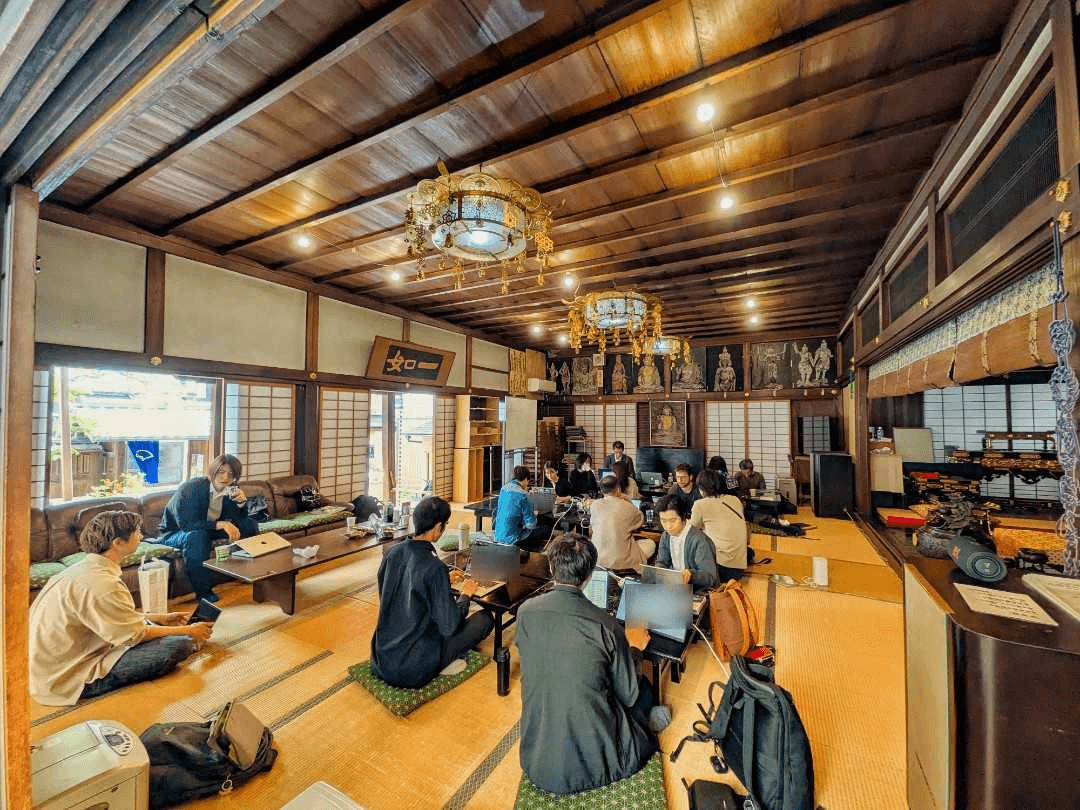
Miyako de IT is a Kyoto study-session community whose connpass group has 647 registered members. It has held 164 events over 7 years. The member figure is not a count of actual attendees. It regularly holds mokumoku sessions, lightning talks, and topic-specific study sessions at temples, traditional townhouses, and university facilities, with registration through connpass. It suits people stuck in self-study or looking for peers at a similar stage.
Combining the routes
The three routes are not mutually exclusive. A common progression is:
1. Beginning: learn basic language concepts with Progate or Dotinstall.
2. Foundations: reinforce the structure with a book or paiza Learning.
3. Middle stage: consider a school if the objective is a career change or side work; otherwise connect with practical peers through study groups.
4. Continuation: once learning becomes habitual, keep information current through ongoing community participation.
Self-study plus study groups is cost-effective
For people who are not rushing into a career change, the combination is reasonable. Materials can remain within a few thousand yen per month and meetings within a few hundred yen to ¥2,000 each. Try this for roughly three months before committing several hundred thousand yen to a school.
Advantages distinctive to Kyoto
Temples, traditional townhouses, and university facilities provide historically and culturally distinctive places to learn. Kyoto's universities, local IT companies, and public-sector initiatives are also geographically close and easier to encounter through a community. The city has fewer IT engineers than Tokyo, but its scale means that several study-session visits can quickly create familiar connections.
To understand potential employers, see 20 Major Manufacturers and IT Companies in Kyoto.
Attend a study group early
Beginners often think a study session is premature. In practice, many attendees at beginner-friendly mokumoku and lightning-talk events are still learning. Visiting once near the start, rather than waiting to complete a curriculum, can improve the rest of the learning process.
Accelerate practical learning in Kyoto
See Miyako de IT's open events for regular mokumoku sessions, lightning talks, and hands-on workshops in Kyoto venues. First-time visitors are welcome.
Related articles
How to Find and Choose IT Study Groups in Kyoto
A practical guide to finding IT study groups in Kyoto by starting from your goal: learn, make progress on your own work, give a short talk, or meet people. Current sessions live on the event listing, while community-by-community comparison lives on a separate Kyoto community guide.
In Kyoto, Making Something Together: The Connections We Hope to Nurture at Miyako de IT
What makes an IT community worth returning to? Miyako de IT founder Tomohiro Iida reflects on meeting people in Kyoto, following curiosity, and supporting small personal challenges.
A Four-Line Help Note Inspired by a Kyoto Mokumoku Session
Using Miyako de IT's Daikoji session as context, a practical four-line help note for discussing blockers with someone new—without claiming unmeasured outcomes.
Source data
The figures cited in this article are based on primary data in the Miyako de IT annual statistics report. It publishes yearly event counts, venue distribution, and event-format data.
Written by
Miyako de IT Editorial Team
Open event related to this article
 Waitlist
Oct 31 (Sat)
Original event title