
Five Reasons New Graduate IT Engineers Should Join a Community
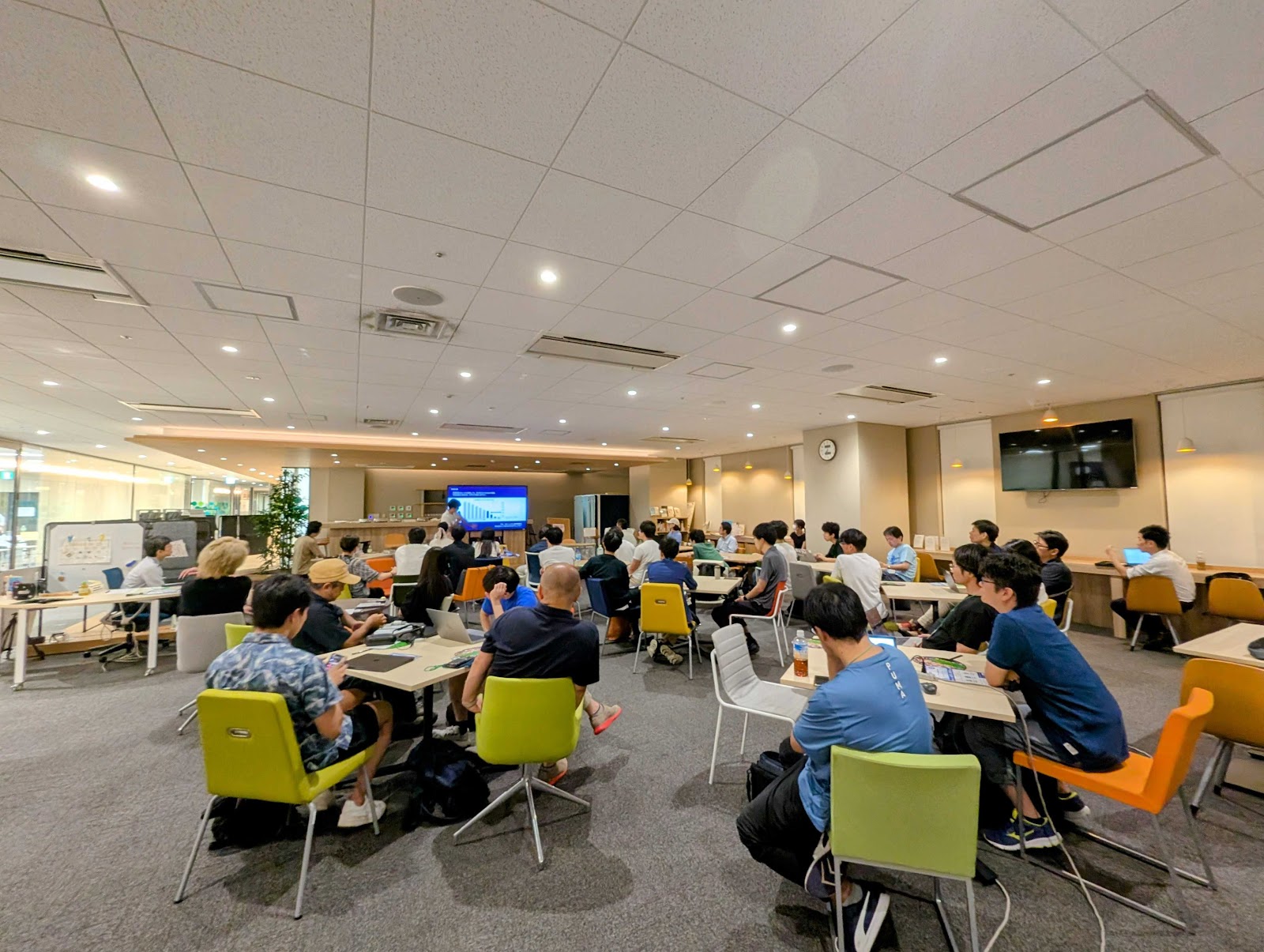
Training already consumes energy, overtime happens, weekends are for rest, and studying alone may feel easier. Nevertheless, seven years of Miyako de IT operations suggest meaningful differences between engineers who began community participation in their first year and those who waited two or three years.
What a company alone cannot teach
Graduate training is often well designed, covering technical foundations, work tools, internal processes, and professional conduct. Some questions still remain difficult to answer inside one company:
- How engineers at other companies actually work.
- How your employer's strengths and weaknesses compare with its industry.
- What career paths exist beyond the path immediately visible inside the company.
- How marketable your developing skills are.
Managers and colleagues share the same organizational context. An external community provides comparison.
1. Hear concrete examples from other companies
Informal questions such as “What have you been working on recently?” reveal details absent from job descriptions and corporate blogs:
- Whether every engineer uses GitHub Copilot.
- How demanding the review culture is.
- The actual balance between remote and office work.
- Whether teams routinely write tests.
Comparing several workplaces makes both the strengths and limitations of your own environment easier to see.
2. Hear experienced engineers describe real decisions
Communities mix engineers with five, ten, or fifteen years of experience. Their stories create a map of possible futures:
- How they evaluated a first career change.
- When they chose management or an individual-contributor path.
- What happened after beginning English study later in their career.
- What they gained and regretted after becoming independent.
Internal colleagues can also share valuable experience, but naturally describe paths within the same company. External communities reveal more employers, roles, and working styles.
3. Place your own progress in context
First-year engineers often worry about whether they are developing too slowly. Speaking with new graduates elsewhere provides reference points:
- One team may already write tests while another does not.
- A React developer can learn from somebody using Vue.
- Discovering that many people found the first six months difficult reduces isolation.
Realizing that a struggle is not unique can support mental stability.
4. Develop a practical sense of technology trends
Articles alone do not always reveal which technologies are in widespread production use; publication and adoption can differ by six months or a year.
Community conversation provides current examples: a team beginning Rust, the point at which Server Actions became stable enough for a use case, or an experiment introducing Claude Code into work. This helps a new engineer prioritize limited learning time.
5. Expand future career options
Relationships built now can matter several years later:
- A community member may mention a position before you search a job site.
- A first independent client may come through a trusted connection.
- A collaborator may already be present when you want to start a project.
These possibilities are invisible in the first year. Building relationships only after deciding to leave a job is late; planting seeds while there is no urgent need is healthier.
Practical cautions for a first visit
Do not pretend to be more advanced
If much of a technical session is unfamiliar, listening is enough. Participation does not require speaking.
Be honest about what you do not know
Explaining that you are a new graduate and still learning helps others respond appropriately. Curiosity is easier to support than false confidence.
Respect your employer's confidentiality
Avoid customer names, revenue figures, unreleased features, and any confidential material. If you are unsure whether something may be discussed, do not disclose it.
Begin with one community
Relationships develop more effectively through repeated participation than by visiting many groups once. After roughly three visits, people begin to remember one another. See Why Three Visits Change a Community into a Place You Belong.
Conclusion: plant seeds in the first year
Community participation lets a new graduate:
1. Hear examples from other companies.
2. Learn directly from experienced engineers.
3. Put personal progress into context.
4. Develop a practical sense of technology trends.
5. Expand future career options.
All five are difficult to obtain from one employer alone. There is no need to attend on an exhausting week; one visit a month when energy permits can still change the view after a year.
Use the Kyoto company guide to understand the local employer landscape, and see Miyako de IT events for monthly sessions at temples, townhouses, and coworking spaces. New graduates and people without prior experience are welcome.
Related articles
Kyoto Mokumoku Sessions: Temple Reports, Participation, and How to Find One
A hub for Kyoto mokumoku sessions, connecting participation guidance, the effects of repeated attendance, reports from temples and other venues, and practical answers based on 164 Miyako de IT events.
The Complete Guide to IT Engineers in Kyoto: Salaries, Career Changes, Work Styles, and Communities (2026 Edition)
A guide to working, changing jobs, and learning as an IT engineer in Kyoto. Drawing on more than 7 years of operating an IT engineer community in Kyoto, this page organizes the whole local IT landscape: major company categories, salary levels, the job market, career paths, communities, work environments, and places to live.
Remote Work and In-Person Contact
Three perspectives for deciding whether to add in-person contact to a remote-working routine: unplanned conversation, reactions you can observe in a shared setting, and a boundary between work and home created by going out. General community value and responses to loneliness are covered separately.
Source data
The figures cited in this article are based on primary data in the Miyako de IT annual statistics report. It publishes yearly event counts, venue distribution, and event-format data.
Written by
Miyako de IT
Open event related to this article
 Waitlist
Oct 31 (Sat)
Original event title