
Remote IT Engineer Loneliness and Five Countermeasures
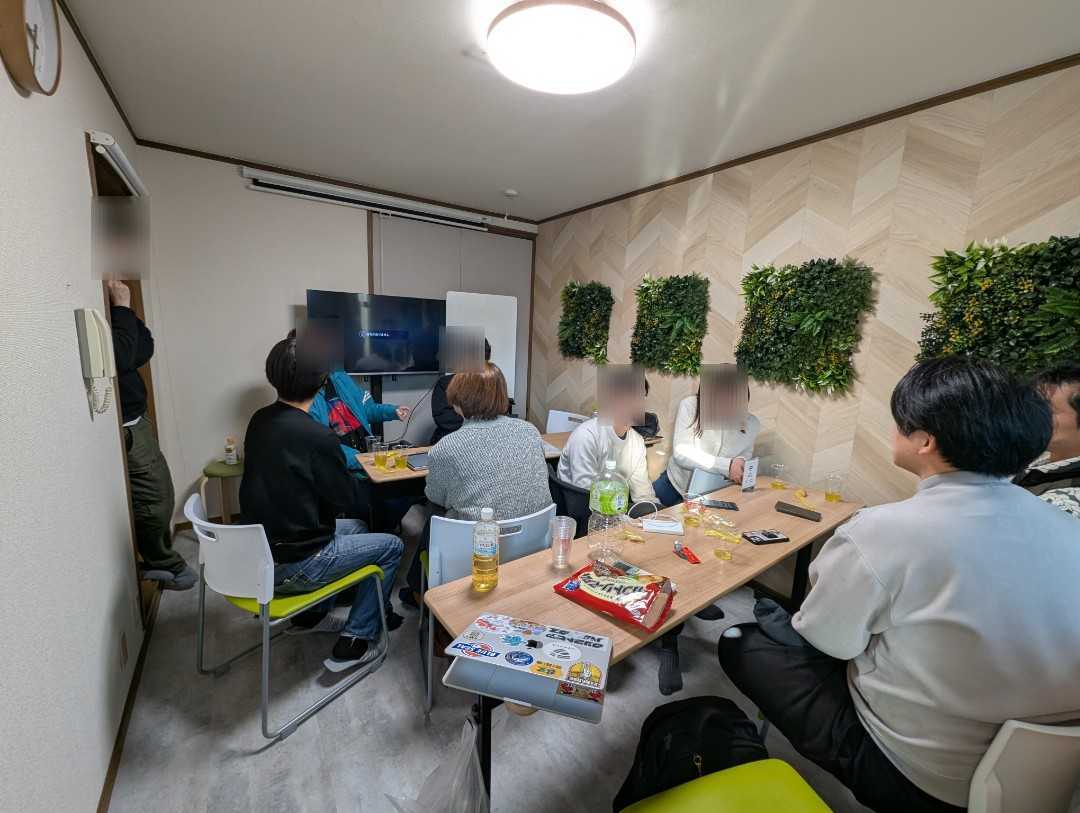
"I have not had a conversation today that was not about work." We hear this from IT engineers for whom remote work has become settled.
Remote work removed commuting, made concentration easier, and widened the choice of where to live. At the same time, unless points of contact with people are created deliberately, a week's conversation can consist only of work messages.
Loneliness is not a problem caused by personality alone. It can arise from the structure of how someone works and lives. This article separates loneliness into five states and then sets out countermeasures by state. It is written from the perspective of Miyako de IT, which has run 164 events over 7 years in Kyoto, but it does not claim that joining a community answers everything. What a community cannot address is stated too.
---
Separating loneliness into five states
"Loneliness" as a single word covers different things. Because the response differs, start by separating the states.
Little conversationA state in which you speak little during the day and have no small talk.
Nobody to discuss technical work withA state in which there is no one with whom to share small questions or things you have tried.
No point of comparisonA state in which you cannot judge whether your way of working, your employer, or your technical ability is reasonable.
Nowhere to share an achievementA state in which a project ends and there is nobody to tell about the satisfaction or the difficulty.
Life closes inA state in which work, meals, and rest all happen in the same place and reasons to go out have decreased.
Which one applies changes what to do. There is no need to address all of them at once.
If these states continue for a long time they may also affect work and health, but we hold no data measuring the size of that effect. Rather than assert it, we keep the countermeasures below to the scope of creating points of contact.
---
Countermeasure 1: Schedule time out of the house in advance
Going out when you feel like it tends to slip when work is busy. Putting it in the calendar first is what continues.
- Coworking once a week
- A study group once a month
- A class or lesson
- Exercise
- The library
- Plans with family or friends
Including plans unrelated to work makes the schedule less dependent on how work is going. Frequency varies by person. Once a week is not necessarily right, so starting at an interval you can maintain is more reliable.
---
Countermeasure 2: Go where you choose how much you talk
If a networking event feels like a burden, choose a co-working session or a listening-centred event. There is no need to build a network from the start.
Spending time in the same place and gaining one person you can greet is enough to lower the barrier to going out. Before registering, check whether the format lets you decide how much you speak. Miyako de IT co-working sessions are also announced with work time and conversation time separated.
If a first visit worries you, reading For people who find study groups intimidating and the first-time guide beforehand makes the day easier to picture.
---
Countermeasure 3: Create somewhere to share technical work
Deciding on a person or a place to share with makes it less likely that small events are carried alone.
- Progress on personal projects
- Tools you tried
- Things that did not work
- Small questions
- Learning notes
Where this is difficult inside a company, use an external community, an online forum, or a study group. On the Miyako de IT Discord, members who met at events exchange messages routinely. Having met once in person can make speaking up online easier.
The role in-person settings play is set out in Five reasons offline communities still matter.
---
Countermeasure 4: Hold a role outside your job
Reception, photography, giving a lightning talk, guiding people at a venue, regional activity: holding a role separate from your job title changes how contact is made. With a role, conversation happens without your having to start it.
Take care, though, not to take on so much operating work in order to fill loneliness that attending itself becomes hard. Deciding the scope and the period in advance is what we recommend.
---
Countermeasure 5: Separate out what a community cannot address
Where there is prolonged insomnia, loss of appetite, strong anxiety, low mood, or palpitations, do not try to handle it through community participation alone.
Please connect with specialist support: a medical institution, an occupational physician, a consultation service run by your local authority or workplace, or family. A community can create contact with people, but it is not a substitute for treatment or specialist consultation. This is a line we draw as organizers.
---
What organizers should watch for
A word for the side that provides the setting as well. We do not promise someone carrying loneliness that attending will produce friends. Promising what cannot be promised leaves the person who came more worn down than before.
What we watch for at Miyako de IT is as follows.
- Say in advance that talking is not required
- Make it possible to leave partway through
- Let people choose whether photographs of them are published
- Prohibit solicitation
- Provide a contact point for problems
- Avoid drawing excessive attention to first-time participants
- Avoid letting regulars continue an in-group conversation
Keeping a state in which people can choose their distance with confidence is, we think, the organizers' role.
---
Summary
Loneliness in remote work is not personal weakness; it can arise from a way of working in which points of contact do not occur automatically.
The countermeasure is not meeting large numbers of people.
1. Schedule time out of the house in advance
2. Have a setting where you choose how much you talk
3. Decide on a person or place for sharing technical work
4. Hold a role outside your job
5. Separate out the range that needs specialist support
There is no need to do all five. Choosing one and continuing with it is enough.
Miyako de IT is not a place that promises to solve loneliness either. We would like it to be one option through which participants can have contact with people and with technology, at a distance that does not strain them. If you are looking for contact in or near Kyoto, check the dates on the event listing. The format with the lowest barrier is the co-working session; the flow of the day is in the guide to joining a co-working session.
Related articles
How Many People Registered for Three or More Community Events?
In the Kyoto IT Community White Paper, fixed as of July 17, 2026, 109 of 459 unique registrants had registered for three or more events. This article sets out the scale of repeat registration and what the figure does and does not show.
Five Reasons Offline Communities Still Matter
Even where remote work is the default, meeting in person keeps a separate role. Not because it is better than online, but because unplanned conversation, another person's level of interest, the memory of a place, and repeated contact arise there. Five reasons drawn from 164 events over 7 years, together with what offline cannot solve.
Lessons from Running a Regional IT Community: What 164 Kyoto Events and 647 Members Showed About Continuing (2026)
A record of 7 years running a regional IT community in Kyoto, from 2019 to 2026. It sets out, year by year, what worked and what did not through launch, moving online, differentiating by place, and becoming established. The definition of the TEMPLE model is kept in its own article.
Source data
The figures cited in this article are based on primary data in the Miyako de IT annual statistics report. It publishes yearly event counts, venue distribution, and event-format data.
Written by
Miyako de IT
Open event related to this article
 Waitlist
Oct 31 (Sat)
Original event title