
Event report
Real Quantum Computers
Bell-state noise and Grover search on IBM Quantum hardware
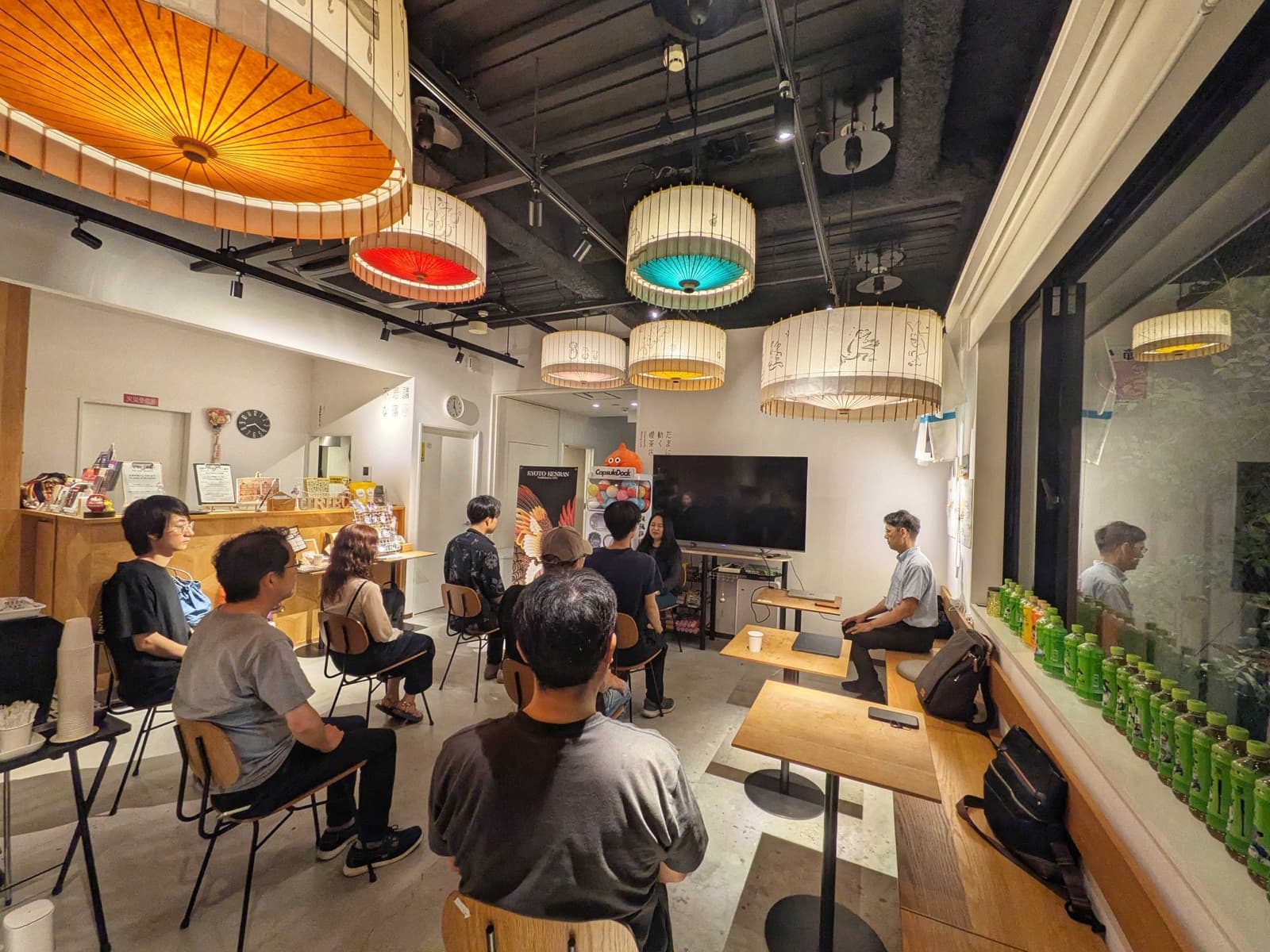
On July 27, 2026, Miyako de IT held the final session of its three-part introduction to quantum computing at Fushigi na Yado in Kyoto. The lecture moved from the physical systems used to build qubits to a hands-on walkthrough of sending Qiskit circuits to IBM Quantum hardware.
Nine people registered on connpass. This is the registration count, not a claim that exactly nine people attended. The original listing is available on connpass.
Event overview
- Event
- Beyond 0 and 1: Introduction to Quantum Computing #3
- Date and time
- July 27, 2026, 7:00–9:00 p.m. JST
- Venue
- Fushigi na Yado, 128 Hashizume-cho, Shimogyo Ward, Kyoto
- Format
- Lecture, IBM hardware walkthrough, and yoga interval
- Lecturer
- Tetsuya Onogi, Graduate School of Science, Osaka University
- Registrations
- 9 on connpass
The technical account below follows Tetsuya Onogi's Real Quantum Computers lecture slides and the IBM quantum-computer hardware exercise. The shot counts and percentages are lecture-material examples, not aggregated results from every participant.
A qubit has a physical identity
A real quantum computer needs a controllable physical system. Two discrete energy levels can represent |0〉 and |1〉. Depending on the hardware, those levels may belong to an atom, a superconducting circuit, or a photon mode.
For electronic systems, a resonant electromagnetic pulse can drive Rabi oscillations between the two states. Photonic systems instead use superposition and interference through devices such as beam splitters and phase shifters. The abstract circuit model is shared, but the physical implementation is not.
Four hardware approaches and their trade-offs
| Approach | Strength | Challenge |
|---|---|---|
| Superconducting | Fast gates and semiconductor-style integration | Millikelvin cooling and relatively short coherence |
| Trapped ion | High fidelity and long coherence | Slower gates and complex laser control |
| Neutral atom | Reconfigurable layouts and rapid scaling | Rydberg-state stability and gate fidelity |
| Photonic | Room-temperature operation and fiber compatibility | Photon loss and probabilistic two-qubit gates |
This comparison shows why physical-qubit count alone cannot rank every machine. Gate fidelity, connectivity, speed, coherence, and the target algorithm all matter.
Alongside overseas systems, the lecture also introduced Osaka University QIQB's domestically developed quantum computer and the superconducting system developed by RIKEN and Fujitsu. The session treated a real machine as a complete system spanning the chip, cooling and control hardware, and cloud access.
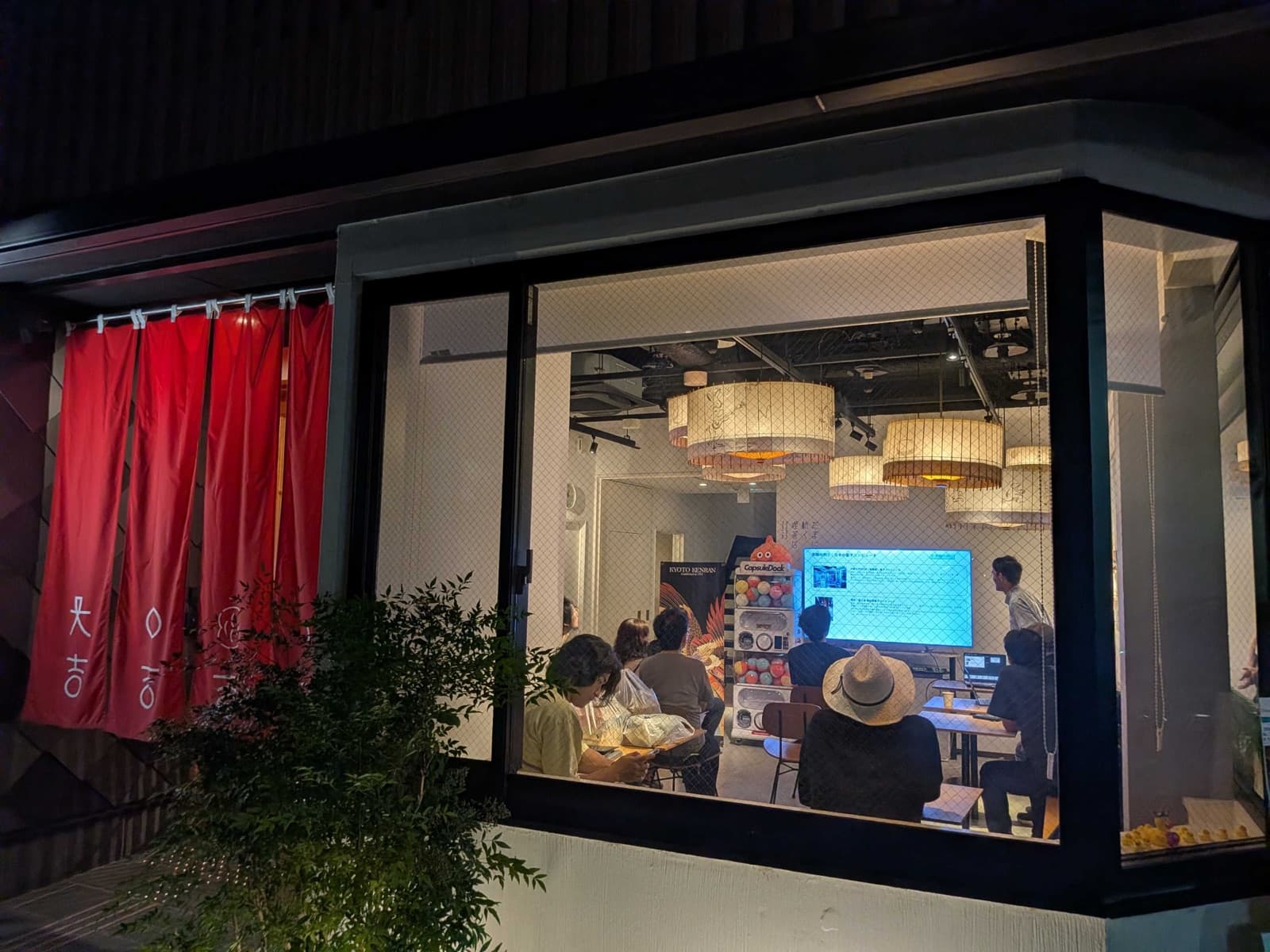
Connecting Qiskit to IBM Quantum hardware
The exercise covered creating an IBM Quantum account, installing Qiskit and qiskit-ibm-runtime, saving the account locally, selecting an operational backend, transpiling a circuit for that machine, and submitting a sampler job to its queue.
API keys are credentials and must not appear in screen shares, public notebooks, or Git repositories. If a key is exposed, it should be deleted and reissued. Secure credential handling is part of using cloud-accessible quantum hardware responsibly.
Bell-state results reveal real-device noise
The first circuit applied a Hadamard gate to create a superposition and a controlled-X gate to entangle two qubits. An ideal Bell-state measurement produces only 00 and 11, with approximately equal probability.
Lecture-material example: across 4,096 shots, the slide reports 1,955 results for 00, 85 for 01, 129 for 10, and 1,927 for 11. Counting 00 and 11 as the expected outcomes gives about 95% accuracy.
The unexpected 01 and 10 outcomes make the hardware constraints visible. Gate error, readout error, and decoherence caused by thermal and electromagnetic interaction all contribute to the gap between an ideal simulator and a physical machine.
Grover search amplifies the target state
The second circuit searched four candidates—00, 01, 10, and 11—for the target 11. Hadamard gates first create an equal superposition. The oracle changes the phase of the target, and the diffusion operator amplifies its amplitude. For this two-qubit example, one Grover iteration is optimal.
Lecture-material example: the target 11 appeared 3,736 times in 4,096 shots, or about 91%. An uninformed random choice would succeed 25% of the time. In this small demonstration, amplitude amplification made the target roughly 3.6 times more likely to be observed.
The theoretical circuit reaches the target with 100% probability. The remaining gap is another measurement of physical-device noise, so the same result demonstrates both the algorithm and the limitations of today's hardware.
From NISQ devices to error correction
Many current machines are described as noisy intermediate-scale quantum, or NISQ, devices. They can run meaningful circuits, but errors accumulate as circuits become deeper and more complex. Cooling, shielding, and control improvements reduce noise at the hardware level.
Fault-tolerant computation also requires quantum error correction: multiple physical qubits work together to form a more reliable logical qubit. Practical progress therefore depends on more than raw physical-qubit counts; logical error rates and sustained computation are central measures.
Yoga between lectures and conversation afterward
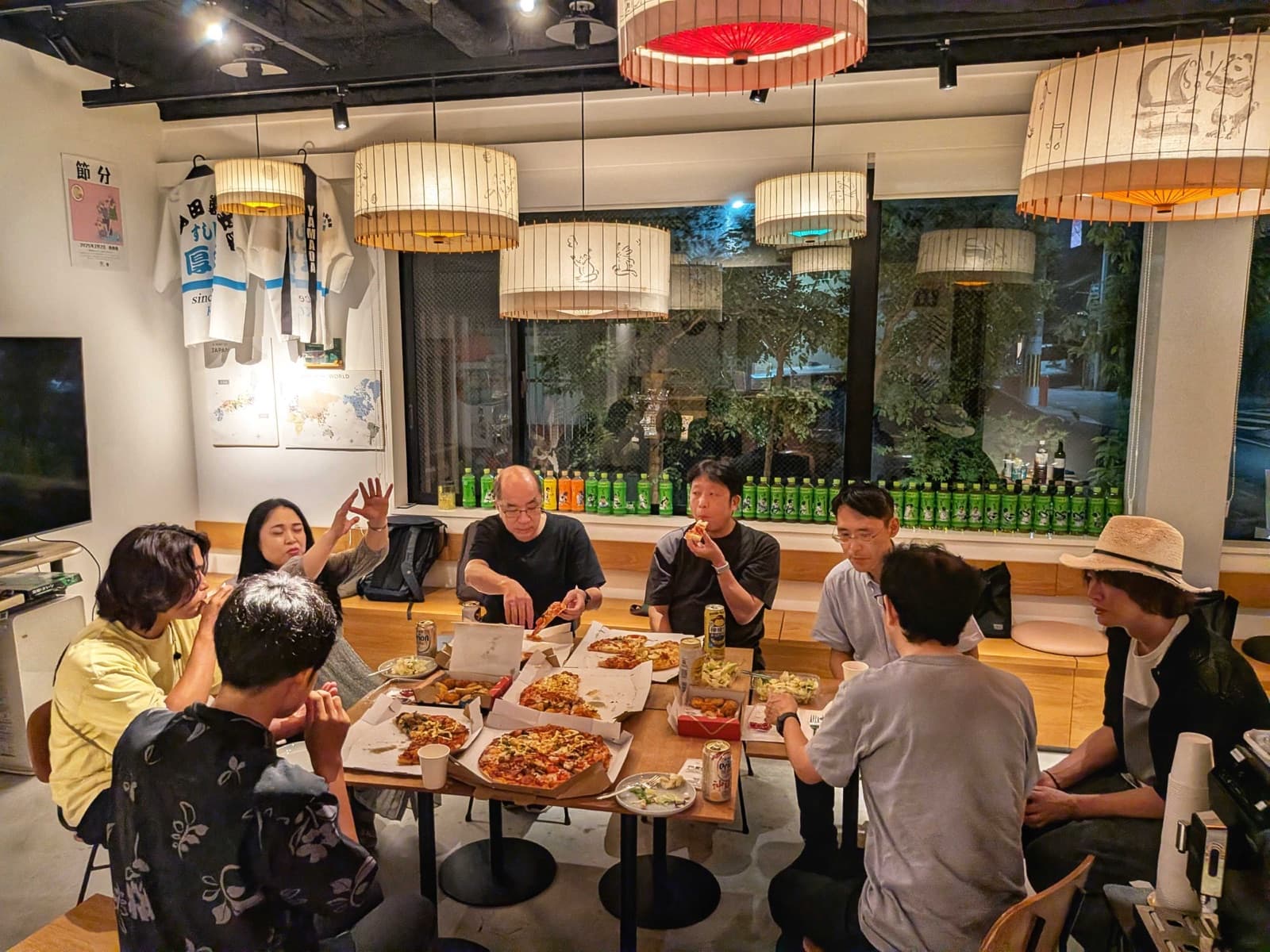
As listed in the event program, the session included a beginner-friendly yoga interval between technical segments. The provided event photo shows the gathering afterward, when participants shared food and informal conversation.
Completing the three-part series
Part 1 introduced superposition and entanglement. Part 2 moved into quantum circuits and Shor's algorithm. Part 3 connected those abstractions to physical implementations and the noise observed on IBM hardware.
The Part 2 event report and the complete series guide provide the earlier context.
Thank you
Thank you to lecturer Tetsuya Onogi, yoga instructor Yuka Onogi, everyone who joined, and the team at Fushigi na Yado. Miyako de IT will continue holding technical study sessions, mokumoku meetups, and networking events in Kyoto.
Upcoming events are listed on the event page and the Miyako de IT connpass group. First-time and solo participants are welcome.