
First Principles Bar #1 Event Report
A dialogue on trust, credibility, offline community, and first-principles thinking
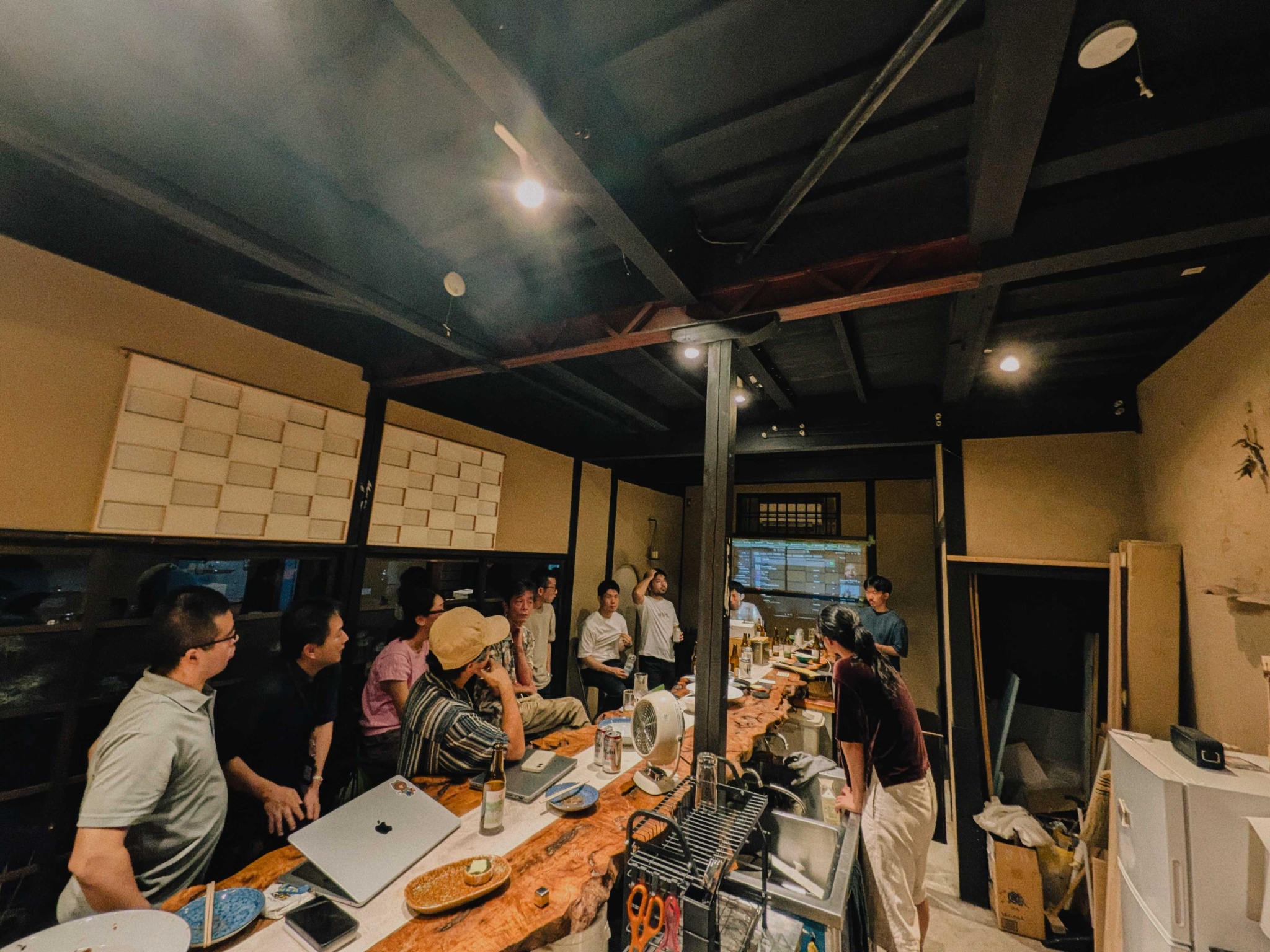
First Principles Bar #1 is a dialogue-based event for taking familiar words and assumptions apart and examining them from the ground up.In brief
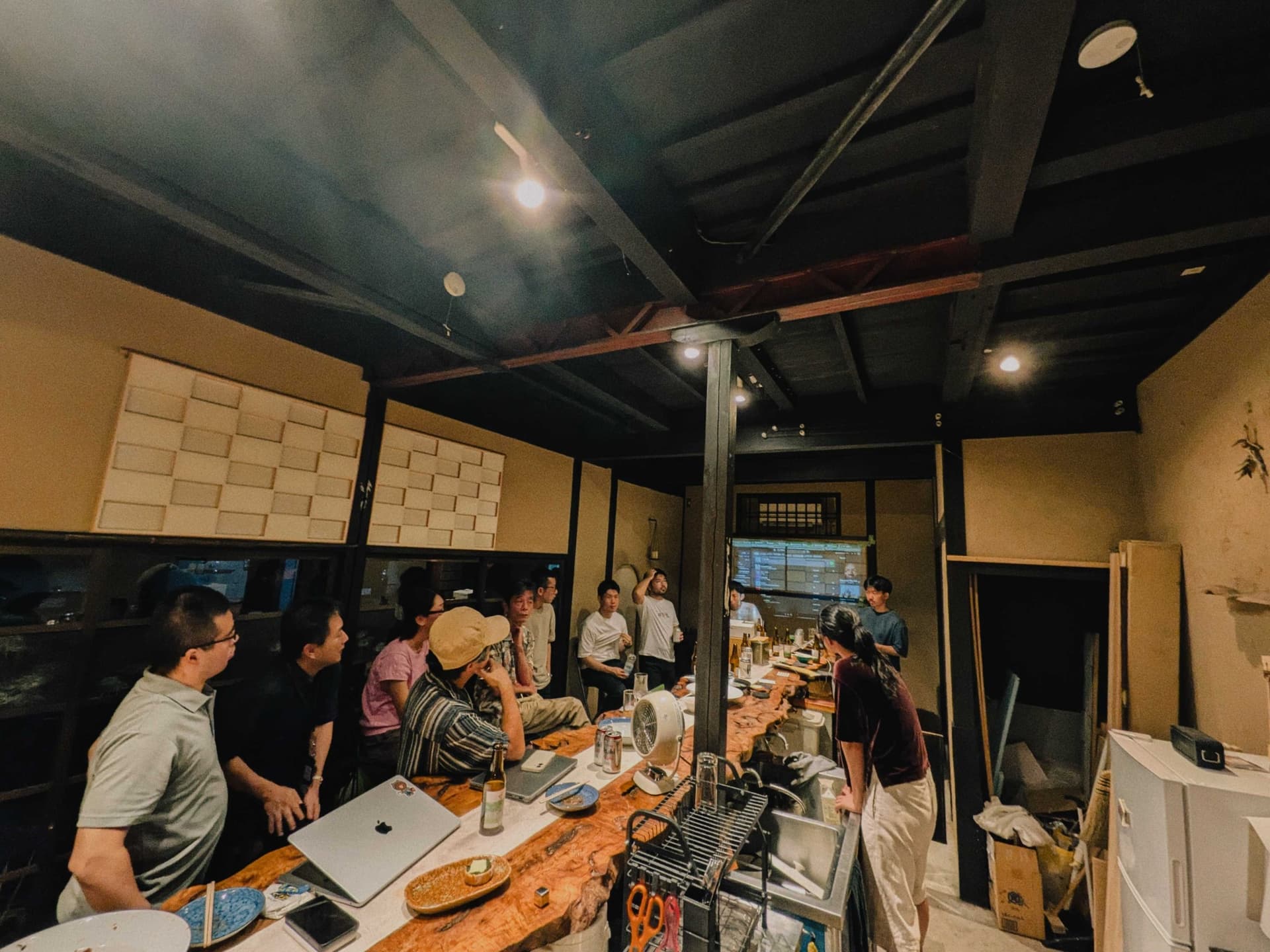
On September 18, 2026, First Principles Bar #1 was held at Natsuya in Kyoto's Kita Ward. The central question was: "Can trust be designed digitally?" Twelve people, including the organizers, discussed definitions of trust and credibility, what we trust and why, the value of offline community, and first-principles thinking.
The first session focused on trust. Twelve of us explored the question around a shared table, with craft beer and food alongside the discussion.
Event overview
| Item | Details |
|---|---|
| Event | First Principles Bar #1: Can Trust Be Designed Digitally? |
| Date | September 18, 2026, 7:00–9:00 p.m. |
| Venue | Natsuya, 66-1 Murasakino Kamimonzencho, Kita Ward, Kyoto |
| Attendance | 12 people, including organizers |
| Main themes | Trust and credibility; the purpose and basis of trust; offline community; first-principles thinking |
| Official page | connpass |
Starting with the definitions of trust and credibility
We began by asking what we actually mean when we use words such as trust and credibility.
In everyday life and at work, people say that a person is trustworthy or that a company has credibility. Once we try to define those terms, however, different people often point to different evidence.
A track record, a title, a referral, past behavior, or the impression formed by meeting someone in person can all influence a judgment. The discussion therefore started with the definitions themselves rather than treating them as settled.
What do we trust, why do we trust it, and how?
Once the definitions were on the table, the discussion moved to another question: what is trust for?
The answer can change depending on the situation. Choosing a person to work with, using a service, accepting information, and joining a community all involve different risks and different kinds of evidence.
We therefore expanded the discussion to what we trust, why we trust it, and how we decide.
The event title asks whether trust can be designed digitally. Before answering that, it helps to make the object and purpose of trust explicit. The conversation moved between signals available online, judgments made through direct interaction, and the role of community.
Most participants raised their hands and joined the discussion
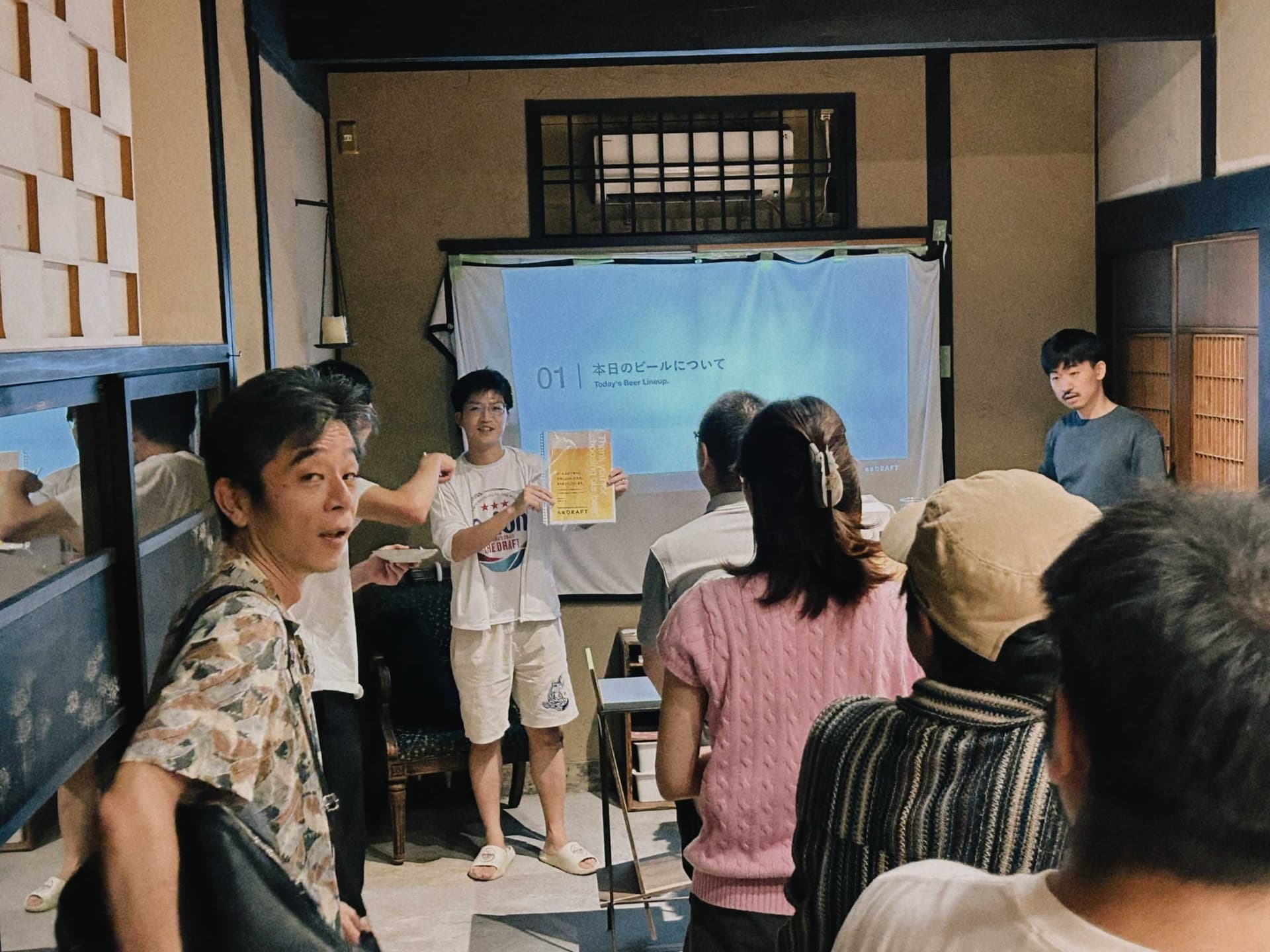
One of the clearest features of the evening was the level of participation. Most attendees actively raised their hands and contributed their own views.
The session was structured around dialogue rather than a one-way lecture. Participants brought their own experiences to the questions, listened to different interpretations, and responded to one another.
Because the word "trust" carries different assumptions depending on a person's work and experience, those differences became material for the next question.
Reconsidering the value of offline community in a digital age
Another major theme was how to define the value of an offline community today.
Information can be found online, people can work together across distance, and AI can serve as a conversational partner. In that environment, what remains distinctive about traveling to the same place and talking face to face?
Seeing expressions, hearing tone of voice, sharing food, and responding together to a question as it emerges all add context to an interaction.
A session about trust also became a practical occasion to think about the information and relationships created when twelve people share one physical space.
What first-principles thinking means in practice
We also discussed first-principles thinking itself.
The basic approach is to examine assumptions, break a problem into more fundamental elements, and rebuild the reasoning from there.
For this event, that meant not stopping at the premise that trust is important. We asked what trust means, why it is needed, and what evidence we use when deciding to trust.
Familiar words can hide assumptions precisely because we use them so often. Taking those words apart was one of the purposes of First Principles Bar.
Craft beer and food around the table
As the name "Bar" suggests, the discussion took place alongside craft beer and food.
We enjoyed craft beer from O-BEER KYOTO's Kizuki-san, as well as craft beer provided by Tenshoku Draft, the event sponsor.
The food was prepared by Sara-san at Natsuya.
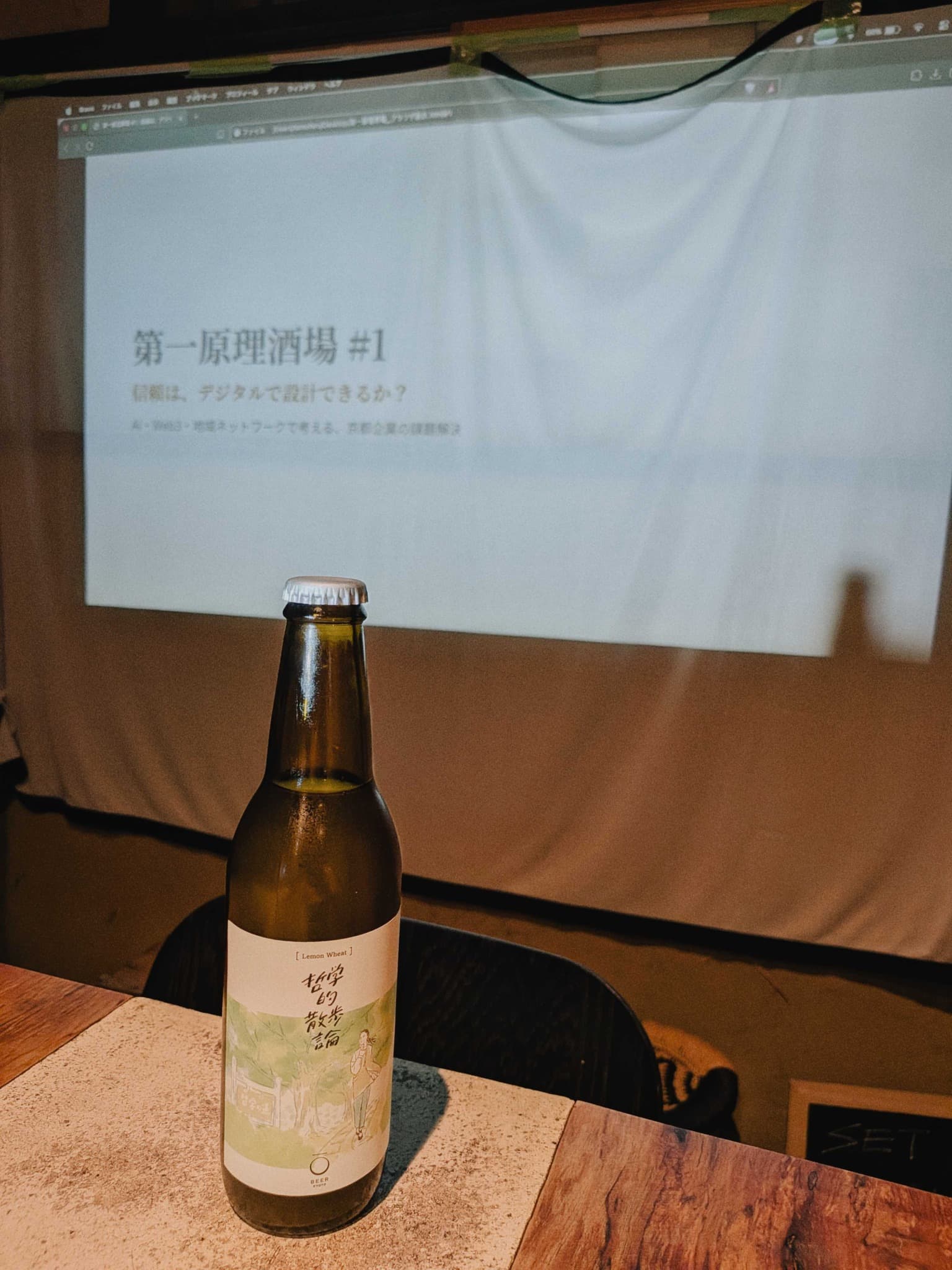
Sharing food and drinks made an abstract topic easier to bring back to concrete experience. The setting was part of what allowed the discussion to stay active throughout the evening.
Thank you for joining us
Thank you to everyone who participated, to Kizuki-san of O-BEER KYOTO, to Sara-san at Natsuya, and to Tenshoku Draft for supporting the event.
Miyako de IT continues to host events about technology and about how technology changes work, relationships, local communities, and the ways people gather.
See upcoming events for future sessions.
Related articles
Mokumoku Meetup #62 at Daikoji, Kyoto | About 10 People Working on AI, IoT, and Development
On September 5, 2026, Miyako de IT and Digital Nomad Kyoto held Mokumoku Meetup #62 at Daikoji in Fushimi Ward, Kyoto. About 10 people joined, including IT engineers, people preparing to start AI development, and people experimenting with IoT.
Exploring Our Relationships with AI: Tonari no AI-san Workshop Report | Kyoto
On August 28, 2026, Miyako de IT held Tonari no AI-san at Taisho University Kyoto Academia. Participants shared how they relate to the AI they use every day, then let those AIs react to the descriptions.
Kyoto IT Engineer Social and Co-working Event Report | Fushigina Yado and Butsugenji Temple
Looking for an IT engineer social or co-working session in Kyoto? This photo report compares three August 2026 events, their venues, formats, and the type of participation each format supports.
Source data
The figures cited in this article are based on primary data in the Miyako de IT annual statistics report. It publishes yearly event counts, venue distribution, and event-format data.
Written by
Miyako de IT Editorial Team
Open event related to this article
 3 seats left
Sep 20 (Sun)
Original event title