
Seven ways IT engineers can build a network through community
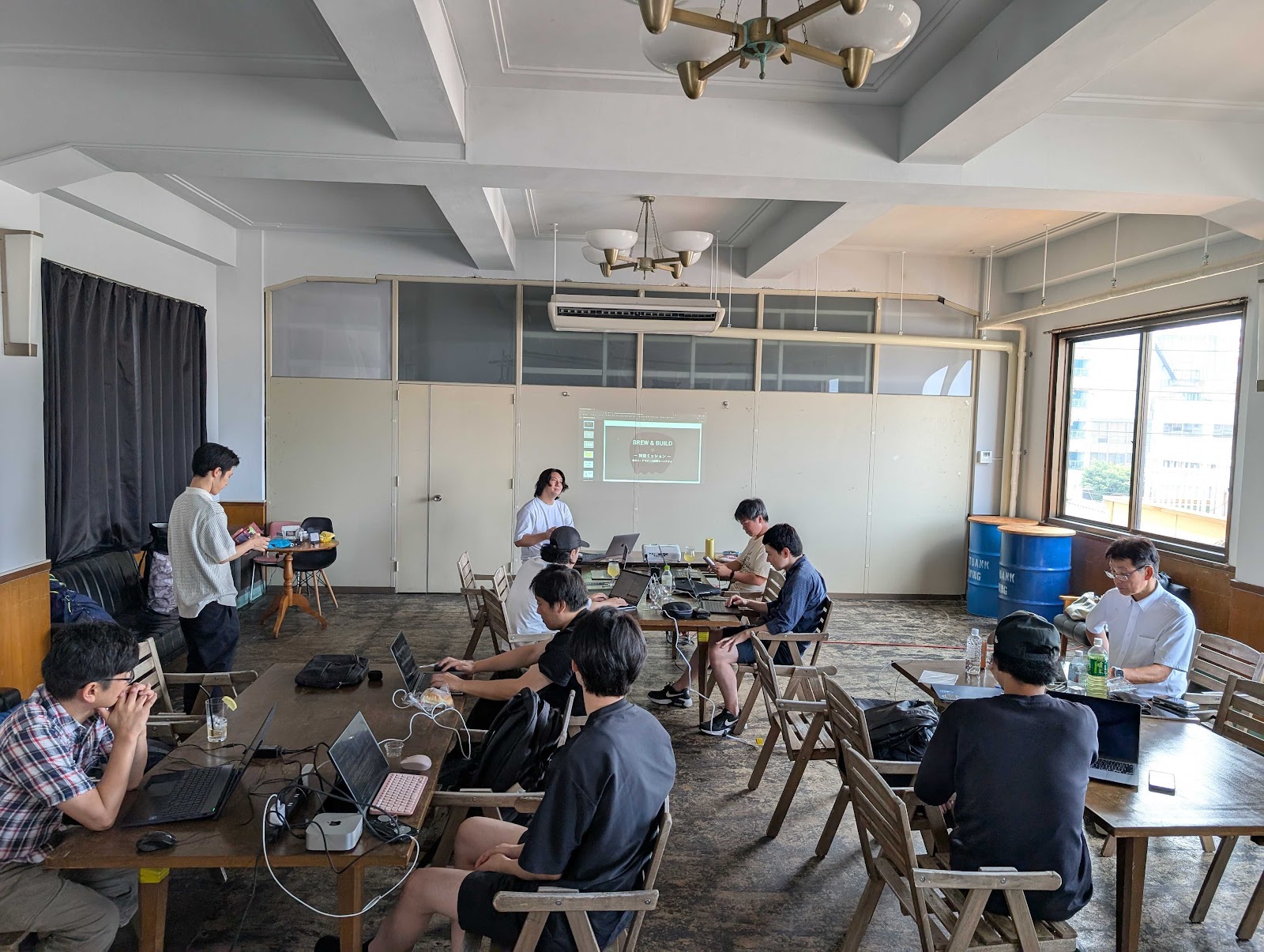
Simply attending more often does not grow a network. Meanwhile, some people naturally broaden their network even when they attend the same number of times. What creates the difference? We share seven actions that naturally grow a network, identified while Miyako de IT built a community of 647 members over seven years.
Why study-group attendance alone does not grow a network
Attend a study group only once and people will not remember your name and face. People are generally said to need three or more encounters to remember someone new. At a place you attend only once a year, people will not remember you even after three years.
Furthermore, lightning-talk sessions and presentation-led study groups spend most of their time listening to talks, leaving little time for conversation among participants. If everyone goes home at the end without a social gathering, no point of contact can form.
In other words, the expectation that a network will form automatically if you show up is mistaken. A network is something to cultivate deliberately.
Method 1: Follow the three-visit rule
In any community, use attending the same place three times in a row as your benchmark. By the third visit, people recognize you as someone who has been coming recently. By five visits, openings for conversation appear. By ten, people remember your name.
Focusing on one community builds a network faster than hopping between a different study group each time. Broaden your range only after first settling into one place.
Method 2: Help with one small thing
Rather than attending only as a participant, taking on one small role deepens relationships quickly. Reception, venue setup, social posting, or photography are enough; it need not be difficult.
Once you have contact with the operating team, they naturally introduce you to other participants. By the time you have a relationship in which you can casually ask, “Where is the next venue again?”, you already have a network.
Method 3: Make your own name memorable
Many engineers introduce themselves with a company name and occupation: “I am Tanaka from Company X, and I work on backend systems.” That is not memorable.
Three elements make an introduction memorable:
- A distinctive attribute: “I am an engineer who likes visiting temples.”
- What you are doing now: “I am currently writing a blog engine in Rust.”
- A problem or something you want to ask: “If anyone knows Tauri pitfalls, please tell me.”
Including these three elements makes it easier for a conversation to continue and creates a reason to contact you later.
Method 4: Join the online conversation
Many communities have Discord or Slack. After meeting offline, speaking even once online deepens the relationship another step.
“Thank you for today” is enough. Going further and mentioning something specific—“I looked into the point that [name] raised about [topic]”—makes you remain in the other person's memory.
Continuity from offline to online makes a network stick.
Method 5: Ask for a small consultation
As an act for broadening a network, “Could you teach me something?” is actually highly effective.
When people take the role of teaching, their affinity for the other person rises (the psychological “Benjamin Franklin effect”). A minor technical question, a recommended Kyoto restaurant, or a career concern—relationships grow more readily when you ask a small question.
However, do not expect too much of the answer. Making the approach is itself communication.
Method 6: Bring someone from another community
Once you are comfortable, bring a member of another community you know.
This works in both directions. The person you bring is grateful, and members of the original community recognize you as someone who introduces people. A reversal occurs: people who become hubs naturally attract connections.
At Miyako de IT, 80% of new members come through introductions from existing members. The person making introductions ultimately connects with more people.
Method 7: Write and share a retrospective
Writing your impressions of a study group on X or a blog is a powerful networking tool.
If you write, “The point [name] made about [topic] at today's mokumoku session was interesting,” and tag that person, they can react. It also becomes a topic of conversation the next time you meet.
People who keep publishing reports reach a state in which others know they exist before meeting them. This is a major advantage.
Conclusion: A network is a by-product
Making networking itself the goal makes behavior transactional and pushes it away. Wanting to learn, help someone, or do something interesting—and letting a network grow as a by-product—is the healthy order. If you do not belong to a community, find one and attend three times. If you have not chosen one, a Miyako de IT event is one option: we have continued in Kyoto for seven years, with a low barrier and a welcoming atmosphere.
Related articles
Remote IT Engineer Loneliness and Five Countermeasures
Loneliness in remote work is not a matter of personality; it can come from a way of working in which points of contact do not occur automatically. This article separates loneliness into five states and sets out countermeasures—scheduling time out of the house, settings where you choose how much you talk, somewhere to share technical work, a role outside your job, and separating out what needs specialist support—from the perspective of running a community in Kyoto for 7 years across 164 events.
How Many People Registered for Three or More Community Events?
In the Kyoto IT Community White Paper, fixed as of July 17, 2026, 109 of 459 unique registrants had registered for three or more events. This article sets out the scale of repeat registration and what the figure does and does not show.
Lessons from Running a Regional IT Community: What 164 Kyoto Events and 647 Members Showed About Continuing (2026)
A record of 7 years running a regional IT community in Kyoto, from 2019 to 2026. It sets out, year by year, what worked and what did not through launch, moving online, differentiating by place, and becoming established. The definition of the TEMPLE model is kept in its own article.
Source data
The figures cited in this article are based on primary data in the Miyako de IT annual statistics report. It publishes yearly event counts, venue distribution, and event-format data.
Written by
Miyako de IT
Open event related to this article
 Waitlist
Oct 31 (Sat)
Original event title