
Connecting researchers and builders in Kyoto
A community can create the first conversation before a formal collaboration begins.
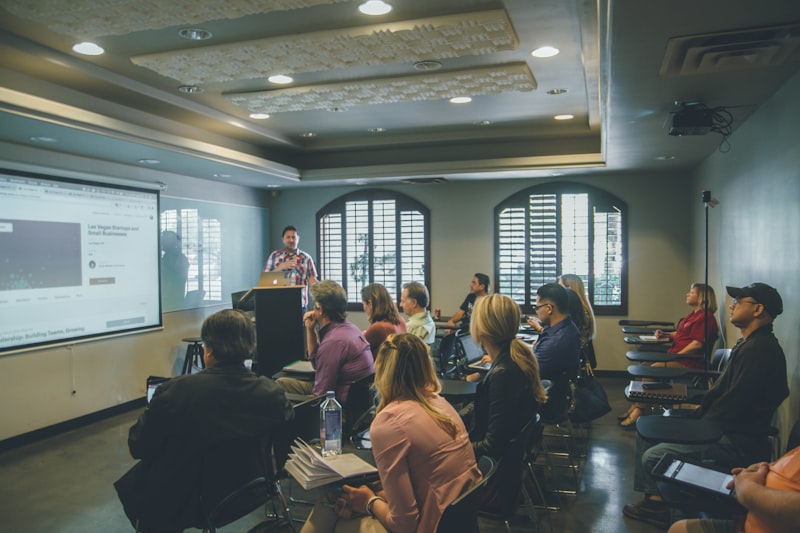
Academia–industry collaboration often stalls before the formal system begins
Researchers may want to bring results into society, test a laboratory theme as a proof of concept, or give students contact with working IT engineers. Universities already have mechanisms for joint research, commissioned research, technology transfer, and startup support. Yet a common obstacle comes earlier: researchers and engineers rarely have a relaxed place to meet and begin a concrete conversation.
The role of Miyako de IT
Miyako de IT is a Kyoto-based platform that connects IT practitioners, companies, universities, and the local community. Founded in 2019 and operated by Netsujo Inc., it has held 164 events and gathered 647 members. Conversations range from web applications, AI, blockchain, infrastructure, and product development to implementation, validation, operations, and business development.
Our venues—including temples, machiya townhouses, and former tea-house spaces—are deliberately neither too formal nor too loose. This middle ground helps researchers and engineers start talking before a project is fully defined.
What engineers add before a PoC
Research quality is not usually the issue. The difficult questions are practical: processing speed, data structures, user interfaces, maintainability, infrastructure cost, and external-service integrations. A dialogue with builders helps turn a research theme into a unit that can actually be tested.
Engineers can also help translate between a research outcome and a social or business use: what should be built first, what would count as validation, and what must be learned before a larger commitment. Students benefit as well by seeing how research can connect to people and products.
Formal systems and informal first contact are complementary
University systems tend to assume that a theme, partner, and conditions are already organized. In practice, a researcher may be:
- Still at the hypothesis stage.
- Unsure whether implementation is feasible.
- Looking for technical feedback before approaching a company.
- Testing whether a small proof of concept can stand on its own.
Before a formal project, a place for candid discussion is necessary.
That is the supporting role of a community such as Miyako de IT: it helps research and implementation meet before there is a contract or a fully formed case.
Make participation fair for engineers
IT engineers also need a reason to participate. Sustainable collaboration can offer:
- Early access to advanced research themes.
- Technical challenges outside ordinary work.
- Relationships with researchers and universities.
- Joint presentations, talks, and documented experience.
- Encounters with possible new-business themes.
Learning, public-interest work, new technical themes, credit, and appropriate compensation all matter. Sustainable collaboration does not treat implementation as invisible goodwill; it defines scope, value, and the next step with care.
A practical path from laboratory to PoC
1. Explain the problem in language that people outside the specialty can understand.
2. Share the research question at a lightning-talk event, networking event, or mokumoku session.
3. Receive practitioners’ views on implementation, validation scope, needed skills, and effort.
4. Define the smallest PoC needed to test the hypothesis.
5. Find people with whom to continue the dialogue.
6. When direction is clear, move to the university’s formal academia–industry process as needed.
Why researchers need this kind of community
Test technical feasibility early
Discuss processing, data, interfaces, maintainability, infrastructure cost, and integrations before a larger commitment.
Translate research into social implementation
Decide what to build first, what counts as validation, and what should be learned before a project grows.
Give students career context
Students can see how research connects with people, products, and working engineers.
Questions formal systems do not always answer first
- A theme may still be a hypothesis.
- Implementation feasibility may be unclear.
- A researcher may need a technical sounding board before approaching a company.
- A small PoC may need testing first.
Fair participation for engineers
Do not leave paid work ambiguous
When implementation has material scope, discuss expected work and compensation openly.
Design non-monetary benefits too
- Early access to advanced research themes.
- Technical challenges outside ordinary work.
- Relationships with researchers and universities.
- Joint presentations, talks, and documented experience.
- Encounters with possible new-business themes.
FAQ
Can researchers outside information science participate?
Yes. The useful starting point is a theme that can benefit from implementation discussion.
Is programming knowledge required?
No. A researcher can bring the problem and learn with practitioners.
Can students join?
Yes, when the event format permits it.
Can I join with an unfinished theme?
Yes. Early-stage hypotheses are where a sounding board can help.
Conclusion
The goal is not to replace university collaboration offices. It is to create the first connection that lets research, technology, and local reality move forward in an implementable form. Miyako de IT continues to cultivate that point of contact in Kyoto. See our community-partnership guide.
Related articles
How Researchers Can Find IT Engineers: Seven Routes to Collaboration
Seven practical routes for researchers seeking IT engineers before an industry collaboration or proof of concept, based on seven years and 164 Miyako de IT events.
In Kyoto, Making Something Together: The Connections We Hope to Nurture at Miyako de IT
What makes an IT community worth returning to? Miyako de IT founder Tomohiro Iida reflects on meeting people in Kyoto, following curiosity, and supporting small personal challenges.
A Four-Line Help Note Inspired by a Kyoto Mokumoku Session
Using Miyako de IT's Daikoji session as context, a practical four-line help note for discussing blockers with someone new—without claiming unmeasured outcomes.
Source data
The figures cited in this article are based on primary data in the Miyako de IT annual statistics report. It publishes yearly event counts, venue distribution, and event-format data.
Written by
Miyako de IT